ACI CHAIRMAN SEYİT ARDIÇ: “THE ONLY PATH TO THE NUCLEAR TARGET IS A STRONG AND DOMESTIC INDUSTRY”
The “12th Nuclear Power Plants Summit” (NPPES), organized in cooperation with the Ankara Chamber of Industry (ACI) and the Nuclear Industry Association (NSD), with the support of the Ministry of Energy and Natural Resources, brought together national and international representatives of the sector. During the summit, a cooperation protocol in the field of nuclear energy was also signed between the Ankara Chamber of Industry and the Chinese Nuclear Society. ACI Chairman Seyit Ardıç said, “Türkiye’s goal is to become a country that understands, develops and exports nuclear technology, and has a say in international nuclear supply chains. There is only one path to this goal: a strong, prepared and certified domestic industry.”
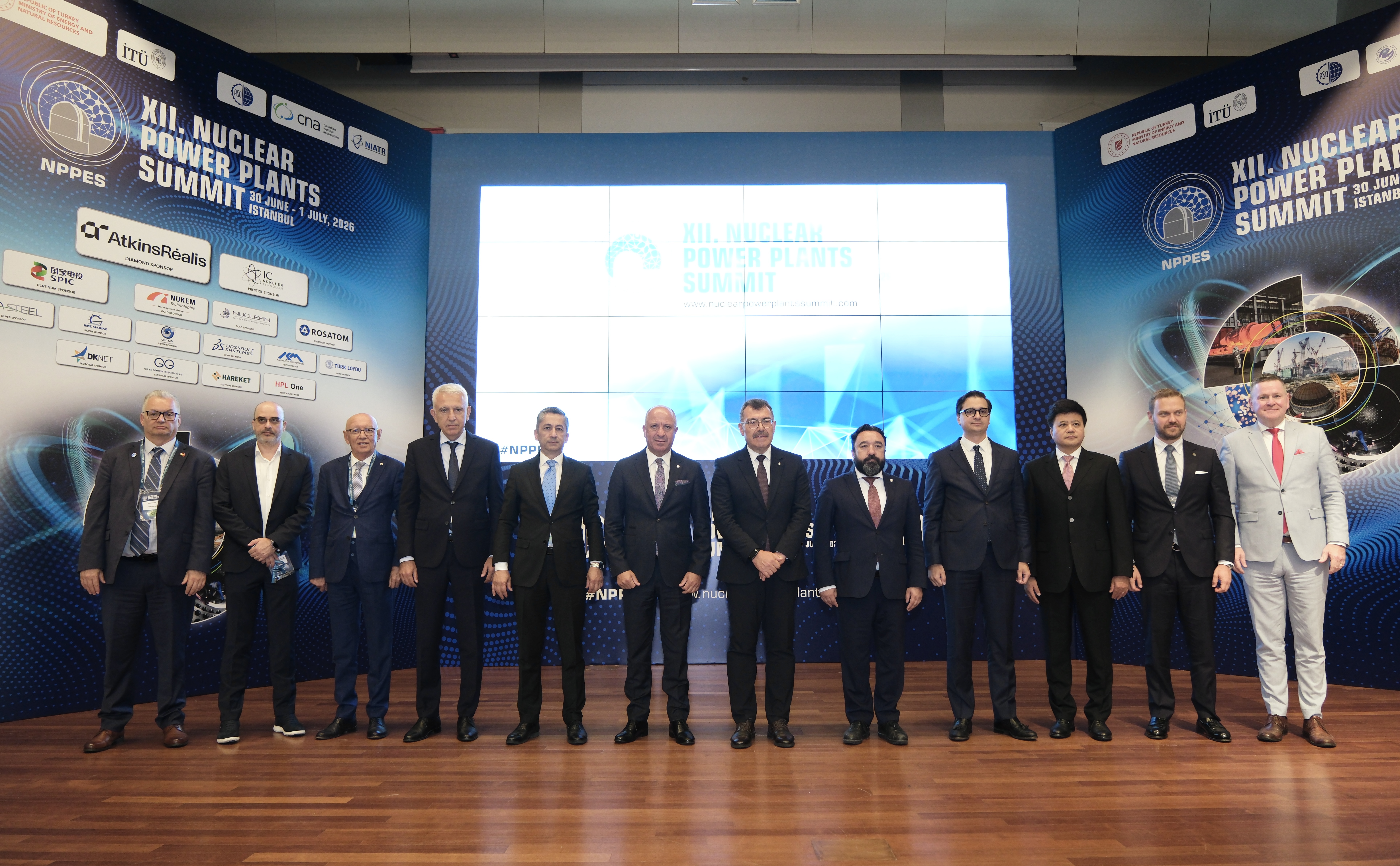
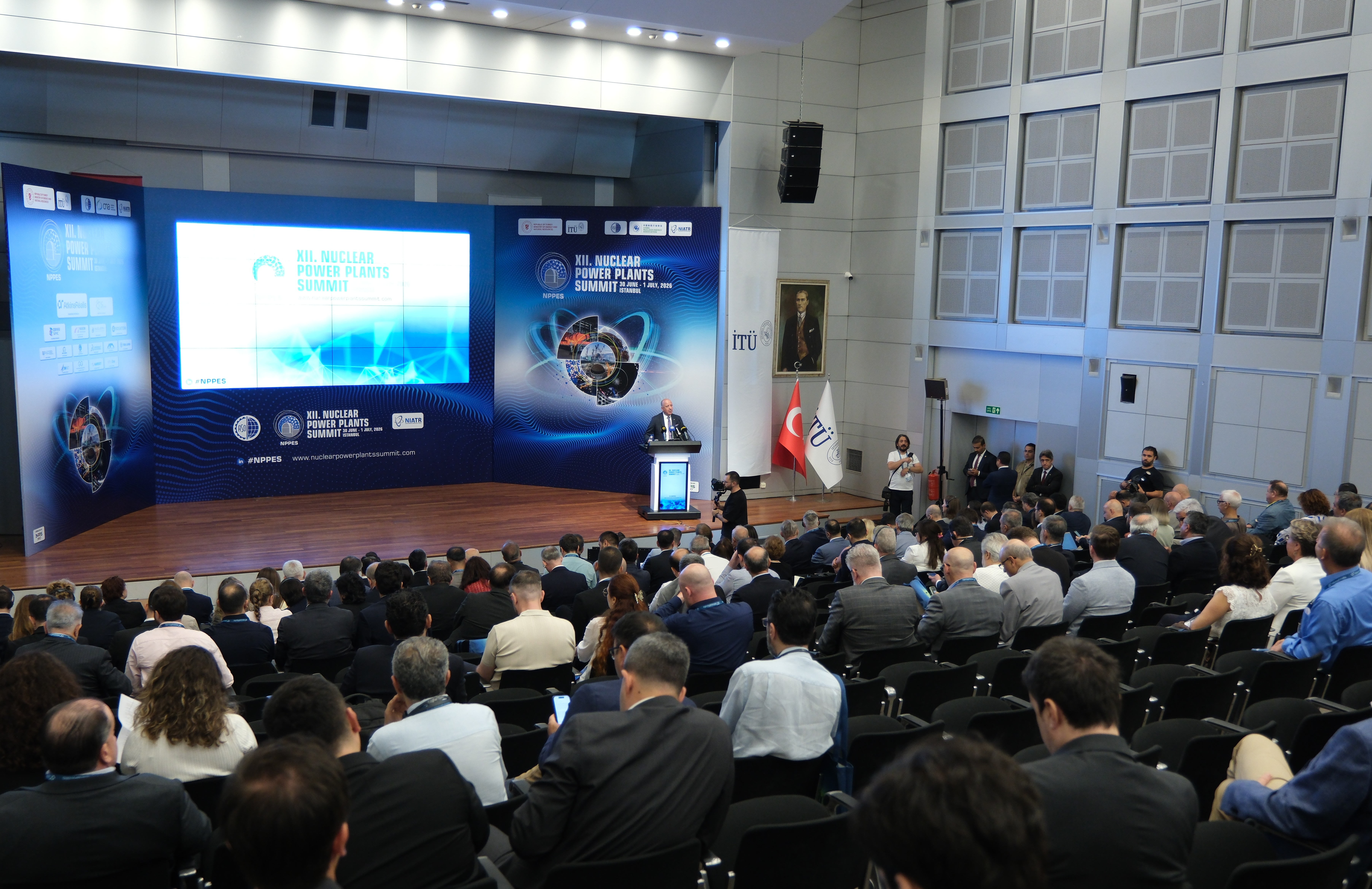
The 12th Nuclear Power Plants Summit, organized by the Ankara Chamber of Industry and the Nuclear Industry Association with the support of the Ministry of Energy and Natural Resources, began in Istanbul. The opening of NPPES was attended by Ankara Chamber of Industry Chairman Seyit Ardıç, Salih Sarı, Director General of Nuclear Energy and International Projects at the Ministry of Energy and Natural Resources, Istanbul Technical University Rector Prof. Dr. Hasan Mandal, U.S. Consul General in Istanbul Michael Lally, Canadian Chargé d’Affaires to Türkiye Larisa Galadza, Ankara Chamber of Industry General Coordinator Prof. Dr. Yavuz Cabbar, Nuclear Industry Association President Alikaan Çiftçi, Akkuyu Nuclear A.Ş. Chairman of the Board Anton Dedusenko, SNPTC Director of International Affairs Fei Min, AtkinsRéalis & Nuclear Canada Senior Vice President and CANDU International President Gary Rose, Romanian National Nuclear Electricity Company (SNN) COO Emil Macovei, and many national and international visitors from the nuclear power plants sector.
“NUCLEAR ENERGY IS A STRATEGIC DEVELOPMENT PLATFORM THAT ADVANCES THE INDUSTRIAL ECOSYSTEM”
Ankara Chamber of Industry Chairman Seyit Ardıç began his speech by asking whether a nuclear power plant can truly be considered complete when its key is handed over to its owner. Stating that the first answer to this question may appear to be “yes,” Chairman Ardıç said, “The turbines turn, electricity is generated and energy is supplied to the grid. However, lasting success gains meaning through the engineering capacity developed behind that facility, the trained human resources, the strengthened supply chain and the technology transformed into production.”
Chairman Ardıç stated that the fundamental issue before countries today goes beyond the installed megawatt capacity and said, “The real issue is the extent to which these investments develop industry, how they strengthen local production capabilities and what technological accumulation they leave to future generations. Because nuclear energy is a strategic development platform that supports energy supply security, encourages high-technology production, trains qualified human resources and advances the industrial ecosystem through international cooperation.”
“NUCLEAR ENERGY IS AT THE CENTER OF THE GLOBAL AGENDA”
Pointing out that energy is being redefined around the world today, Chairman Ardıç stated that while energy security, climate change and technological transformation are taking place simultaneously, nuclear energy has once again moved to the center of the global agenda with its low-carbon structure, high capacity factor and uninterrupted supply security.
Chairman Ardıç noted that many countries, from the United States to China, from France to South Korea, are accelerating new power plant investments, extending the operating life of existing plants and turning toward small modular reactor technologies.
“A COUNTRY’S NUCLEAR PROGRAM IS AN INDICATOR OF THE DEPTH OF ITS INDUSTRY”
Chairman Ardıç stated that none of these countries view nuclear energy merely as a source of electricity and said, “For them, nuclear energy is an indicator of high technology, industrial depth, qualified human resources and national competitiveness. In short, a country’s nuclear program is also an indicator of how deep that country’s industry is.”
Emphasizing that countries investing in nuclear energy are not only producing more electricity but also building the industrial capacity, engineering know-how and technological competence of the future, Chairman Ardıç said, “Today, energy is one of the fundamental forces that feeds economic competitiveness, expands technological capacity and shapes the strategic position of countries.”
“COP31 WILL BE A STRONG PLATFORM BRINGING TURKISH INDUSTRY TOGETHER WITH INTERNATIONAL STAKEHOLDERS”
Stating that this search for depth also finds its counterpart in global climate diplomacy, Chairman Ardıç said:
“At COP28, nuclear energy was clearly included among low-carbon sources for the first time in the United Nations climate process; this recognition was further strengthened at COP29 and COP30. We believe that COP31, which will be hosted by our country in Antalya this year, will not only contribute to global climate goals but also create a strong platform that will bring Turkish industry’s nuclear know-how, engineering capabilities and production power together with international stakeholders. As the Ankara Chamber of Industry, we are ready to bring our domestic suppliers to this international table and personally tell their story.”
Chairman Ardıç stated that Türkiye has the potential to become one of the natural production and cooperation centers of global nuclear supply chains with its strong industrial infrastructure, competitive production capability, qualified human resources and strategic location at the intersection of three continents. “Transforming this potential into lasting partnerships and high value-added production is a common opportunity for all of us,” he said.
“ENERGY SUPPLY SECURITY IS THE FOUNDATION OF TECHNOLOGICAL INDEPENDENCE”
Stating that Türkiye has a strong position among the countries guiding, contributing to and assuming responsibility for this transformation, Chairman Ardıç said, “In line with the vision set forth by our Ministry of Energy and Natural Resources, our country is conducting a comprehensive nuclear program that includes the power plants planned in Sinop and Thrace after Akkuyu, as well as small modular reactors. Our goal is clear: to reach 20 gigawatts of installed nuclear capacity by 2050, to meet at least 5 gigawatts of this through small modular reactors, to reduce foreign dependency in energy and to provide strong support for our 2053 net zero emission target.”
Chairman Ardıç emphasized that this is not merely an energy target and said, “Energy supply security is the foundation of economic security, industrial security and technological independence. The more a country produces its own energy, the more it determines its own future.”
Regarding the technological pillar of these targets, Chairman Ardıç stated that they consider the Pre-Competitive Cooperation Program call opened by the Ministry of Industry and Technology in the nuclear field to be highly valuable. He emphasized that this call is a concrete step that will pave the way for developing domestic know-how in nuclear technology and strengthening the R&D and production capacity of industry.
“OUR LOCALIZATION RATE IN AKKUYU HAS APPROACHED 55 PERCENT”
Chairman Ardıç stated that Türkiye was introduced to nuclear energy through Akkuyu and that it must become a partner in nuclear technology through Sinop, continuing as follows:
“This approach is finding its concrete response in Akkuyu. Akkuyu Nuclear Power Plant has strongly demonstrated that Türkiye’s industrial capacity in this field can develop and comply with nuclear quality standards. Today, our localization rate in Akkuyu has approached 55 percent. This rate is a concrete indicator of the determination of hundreds of domestic companies to comply with high engineering discipline, strict quality processes and the world’s most sensitive supply standards. The step to be taken in Akkuyu this year will be a historic threshold that carries our country’s nuclear energy journey from the field to the system, and from investment to institutional capacity. But the same experience has also revealed a reality: this potential does not automatically turn into added value. If we leave domestic contribution to chance, our second power plant will also largely turn into an import item. When this approach is implemented from the very beginning with a systematic perspective, Sinop will become not only an investment that increases Türkiye’s energy capacity, but also a strategic transformation project that strengthens Turkish industry’s ability to produce technology.”
“AN INDUSTRY THAT RISES IN NUCLEAR ENERGY ALSO ELEVATES OTHER INDUSTRIAL BRANCHES”
Chairman Ardıç stated that carrying the know-how, trained human resources and developing industrial infrastructure Türkiye has built in Akkuyu to a higher level in Sinop will make the nuclear ecosystem permanent and sustainable. “Moreover, the nuclear industry requires the highest quality standards, the most advanced engineering and the strongest certification culture. An industry that surpasses the nuclear quality threshold gains a transformative power that can carry this competence to all high-technology fields, from defense to aviation, from automotive to healthcare. In other words, an industry that rises in nuclear energy actually elevates the whole of its industry,” he said.
“THE ONLY PATH TO THE NUCLEAR TARGET IS A STRONG AND DOMESTIC INDUSTRY”
Chairman Ardıç stated that Türkiye’s goal should not be merely to become a country that produces nuclear energy and said, “Türkiye’s goal is to become a country that understands, develops and exports nuclear technology, and has a say in international nuclear supply chains. There is only one path to this goal: a strong, prepared and certified domestic industry.”
“NÜKSAK HAS BECOME A STRONG COOPERATION PLATFORM THAT GUIDES TURKISH INDUSTRY’S PREPARATION FOR THE NUCLEAR ECOSYSTEM”
Recalling that, as the Ankara Chamber of Industry, they foresaw this need years ago and established NÜKSAK, the country’s first nuclear industry cluster, in 2017, Chairman Ardıç said, “Since that day, we have focused on one single goal: enabling a part produced by an Anatolian company to take its place inside a nuclear power plant that requires the world’s most demanding quality standards.”
Chairman Ardıç stated that they have walked a long and patient path together, from helping companies comply with international standards and complete certification processes to adopting a quality culture and accessing global supply chains. He emphasized that today NÜKSAK has become a strong cooperation platform that guides Turkish industry’s preparation for the nuclear ecosystem, strengthens common wisdom and expands institutional capacity.
Chairman Ardıç stated that the Ministry of Industry and Technology’s decision to support this cluster for another five years is the strongest confirmation that they are on the right path, and said:
“There is a tool through which this preparation has become visible: NETBİS, the Nuclear Energy Supplier Information System, implemented by our Ministry of Energy and Natural Resources and recently introduced at an event hosted by our Chamber. NETBİS, a strategic information infrastructure that forms the nuclear industry inventory, brings together under one roof the production capabilities, quality competencies and technical capacities of our companies that can take part in nuclear projects. From now on, the answer to the question ‘Who can do this job?’ will be found securely in our registered, verified and continuously updated national supplier pool. Turning localization in a power plant into lasting success depends on a certified, traceable and ready supplier network. NÜKSAK builds this network, and NETBİS makes it visible, accessible and manageable.”
“THE NUCLEAR INDUSTRY IS A HIGH-TECH ATTRACTION AREA THAT KEEPS OUR YOUNG ENGINEERS IN THEIR COUNTRY”
Emphasizing that the only condition behind capability is qualified human resources, Chairman Ardıç stated that a nuclear power plant needs engineers to design it, skilled workers to perform the welding, quality experts to prepare the documentation, and scientists to manage the entire process.
Chairman Ardıç emphasized that if Türkiye is to have a say in nuclear energy, it must also train this human resource itself. “As the Ankara Chamber of Industry, we are ready to do our part together with our universities and vocational education institutions to train this qualified workforce. Because the nuclear industry is also a high-tech attraction area that keeps our young engineers in their country and reverses brain drain,” he said.
“NUCLEAR INVESTMENTS ADVANCE THE ENTIRE INDUSTRY”
Stating that nuclear energy is not only an issue of the energy sector, Chairman Ardıç concluded his speech as follows:
“A nuclear power plant mobilizes dozens of sectors at the same time, from machinery to electronics, from software to automation, from metallurgy to advanced materials. Each investment creates new production capabilities in the industrial ecosystem, expands technology development capacity and encourages high value-added production. For this reason, nuclear investments function as a powerful development lever that advances the entire industry. The real measure of success is not the megawatts installed, but the lasting industrial accumulation this investment leaves behind. The key of a nuclear power plant may be handed over at the door. But the knowledge behind that plant is not handed over together with that key. Only the country that builds it with its own industry, its own engineers and its own hard work wins. As the Ankara Chamber of Industry, we act with the responsibility of being one of the institutions building the nuclear future of Turkish industry. In this transformation process, we will continue with determination our efforts to prepare our industrialists, bring our companies together with nuclear quality standards and strengthen the domestic supply chain.”
COOPERATION AGREEMENT IN THE FIELD OF NUCLEAR ENERGY SIGNED BETWEEN ACI AND THE CHINESE NUCLEAR SOCIETY
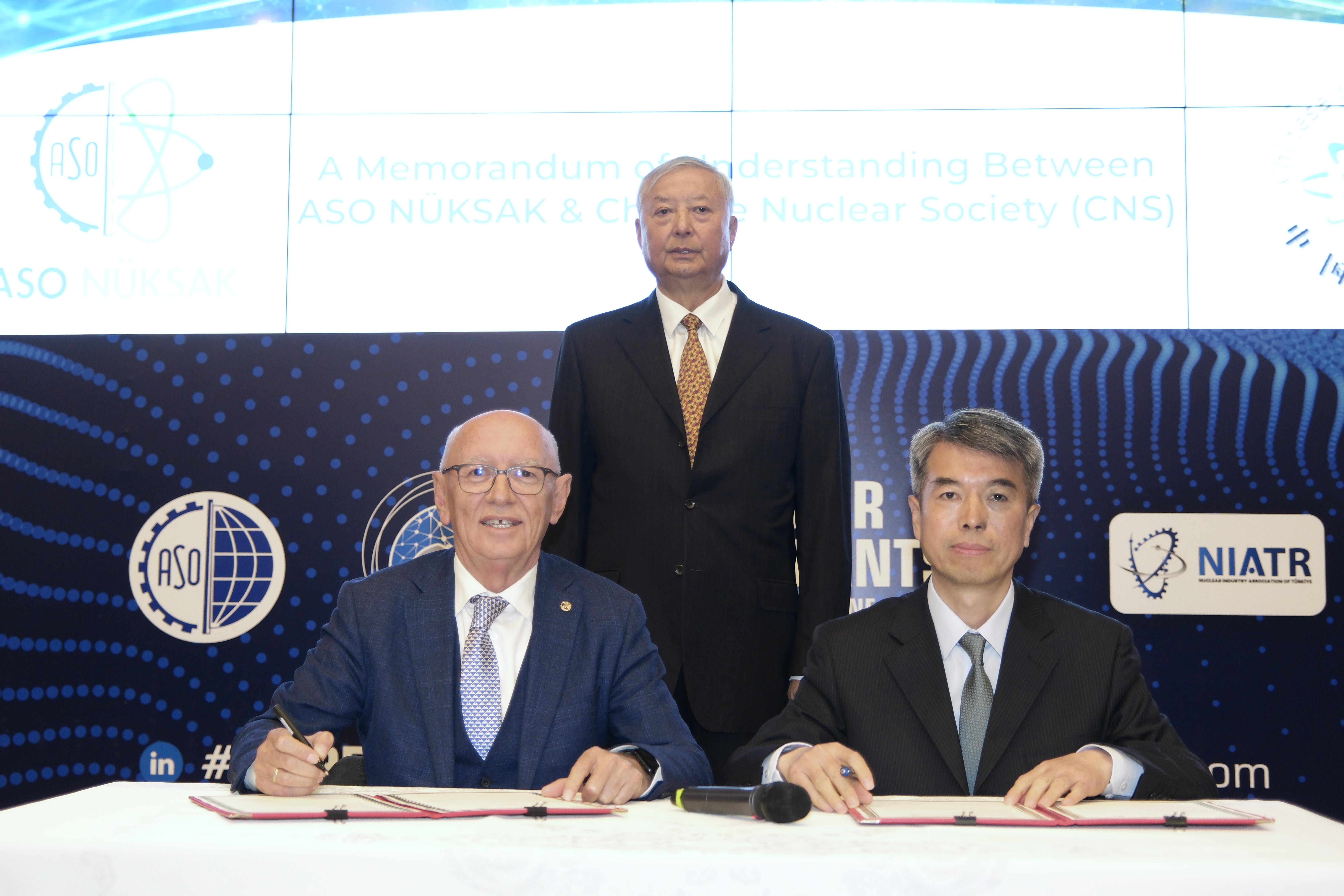
The Nuclear Industry Cluster (ACI NÜKSAK), which operates under the coordination of the Ankara Chamber of Industry to increase the competence of Turkish industry in nuclear technology and develop international cooperation, signed a Memorandum of Understanding (MoU) with the Chinese Nuclear Society (CNS) to strengthen cooperation in the field of nuclear energy.
The Memorandum of Understanding signed between the Ankara Chamber of Industry and the Chinese Nuclear Society aims to develop institutional cooperation between Türkiye and China in the field of nuclear energy, increase the sharing of knowledge and experience, and strengthen sustainable cooperation between the nuclear ecosystems of the two countries.
Under the agreement signed by Ankara Chamber of Industry General Coordinator Prof. Dr. Yavuz Cabbar and Chinese Nuclear Society Vice President and Secretary General Jianqiao Liu, the parties aim to organize online and offline meetings, industrial dialogues and seminars on new nuclear power plant projects, including small modular reactors (SMRs); cooperate in nuclear education, human resource development and expert support; strengthen technical knowledge sharing between the parties; and establish new areas of cooperation in line with mutual agreement.