STRATEGIC REPORT FROM THE ANKARA CHAMBER OF INDUSTRY:
THE IMPACTS OF THE EU–INDIA FREE TRADE AGREEMENT ON TURKISH INDUSTRY ANALYZED
IT PRESENTS BOTH RISKS AND OPPORTUNITIES FOR TURKISH INDUSTRY
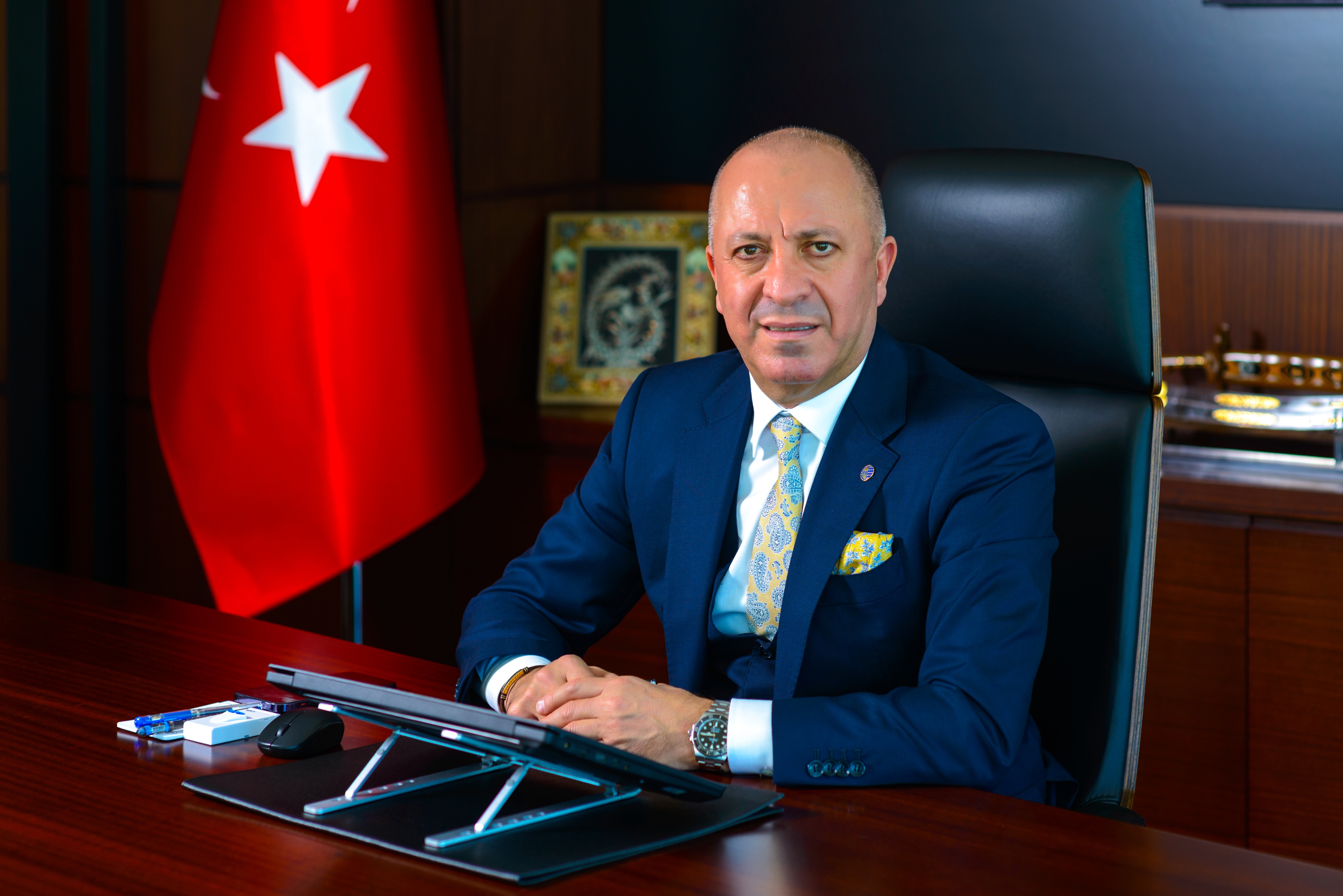
ASO PRESIDENT SEYİT ARDIÇ: “IN THE NEW ERA, ADAPTING TO CHANGE IS A NECESSITY; HOWEVER, LASTING SUCCESS WILL BELONG TO THOSE WHO ANTICIPATE CHANGE AND SHAPE IT.”
The Ankara Chamber of Industry (ASO) has published a comprehensive research report analyzing the potential impacts of the Free Trade Agreement (FTA) between the European Union and India on Turkish industry. The report, which adds a new dimension to ASO’s strategic studies guiding industrial development, reveals that the agreement between the EU — Türkiye’s largest foreign trade partner — and India may increase competitive pressure in certain sectors while also creating new opportunities. Emphasizing the importance of accurately interpreting global trade transformations and taking strategic steps during this rapidly evolving period, ASO President Seyit Ardıç stated: “In the new era, adapting to change is a necessity; however, lasting success will belong to those who anticipate change and shape it.”
The Ankara Chamber of Industry (ASO) has released a comprehensive research report examining in detail the possible effects of the politically agreed EU–India Free Trade Agreement (FTA) on Türkiye and, in particular, Ankara’s industrial sector. Titled “EU–India Free Trade Agreement: Risks and Strategic Opportunities for Turkish Industry,” the report analyzes the changing dynamics of global trade, areas of risk, sectoral competition dynamics, possible reflections on Ankara’s industry, and the strategic roadmap that should be followed in the new period.
ASO President Seyit Ardıç emphasized that the global trade order is undergoing a profound transformation and noted that the EU–India FTA is one of the clearest indicators of this new order. Stating that this economic integration, covering nearly 2 billion people, will not only increase trade volume between the two economies but also significantly reshape the supply chain architecture and competitive dynamics of the European Union — Türkiye’s largest foreign trade partner — Ardıç stressed that the report serves not only as an analysis but also as a strategic roadmap for Turkish industry. He stated: “Our report presents the risks and opportunities facing our industry in light of current data, sectoral analyses, international comparisons, and field interviews, while aiming to provide a concrete action plan. Our objective is to ensure that our industrialists become active players in this new era rather than mere spectators.”
THE IMPACT WILL BE FELT AS A GRADUAL COMPETITIVE PRESSURE RATHER THAN A SUDDEN SHOCK
The ASO report highlights the strategic importance of the EU market for Turkish industry. According to the data, the EU imports approximately USD 115 billion from Türkiye, while imports from India stand at USD 81.8 billion. This indicates that India may increase its export performance in certain sectors through the FTA, potentially weakening Türkiye’s position in the EU market where it is currently a strong supplier.
The report underlines that the impact of the EU–India FTA on Türkiye is expected to manifest not as an abrupt and destructive market loss, but rather as a gradual increase in competitive pressure. It notes that Turkish companies may experience erosion in their competitive advantages, particularly in standardized, price-sensitive, and mass-produced product segments, which may result in weakened bargaining power and shrinking profit margins. It is also emphasized that this pressure will vary depending on product groups and value-added levels across sectors.
WHICH SECTORS ARE AT RISK?
The report identifies the electrical machinery and equipment sector as one of the most critical risk areas. The EU imports USD 7.1 billion worth of products in this sector from Türkiye, while imports from India amount to USD 11.6 billion. It is highlighted that India’s annual export growth rate to the EU market in this sector stands at 41.5%, compared to Türkiye’s 8.2%, demonstrating that India has achieved significantly stronger momentum. Therefore, the sector is considered among the highest-priority areas requiring urgent strategic action.
Machinery and mechanical equipment, as well as certain automotive components, are also identified as sectors where competitive pressure may intensify.
COMPETITION IS NO LONGER DETERMINED SOLELY BY PRICE
The ASO report particularly emphasizes that competition in the new era can no longer be evaluated solely on the basis of price. Non-tariff factors such as rules of origin, compliance with technical standards, certification speed, supply chain transparency, and delivery times now play a decisive role, and Türkiye holds important advantages in these areas.
Türkiye’s experience in aligning with the EU acquis, its geographical proximity, and its fast delivery capability are identified as strategic strengths of Turkish industry. The ability to deliver goods from Türkiye to Europe within 48–72 hours via road transportation is regarded as a critical supply advantage for European manufacturers. The report stresses that these advantages can be further strengthened through appropriate support mechanisms and a robust transformation program.
ARDIÇ: “GREEN TRANSFORMATION CAN BECOME A STRATEGIC DEFENSE LINE FOR TÜRKİYE”
Another major topic highlighted in the report is the Carbon Border Adjustment Mechanism (CBAM). It is stated that CBAM, which will become one of the most critical determinants of the new trade equation as of 2026, may also create a significant competitive advantage for Türkiye.
The report notes that Türkiye’s production infrastructure in the iron and steel sector, particularly its reliance on electric arc furnaces, offers an important carbon advantage compared to India’s more coal-dependent structure. It further emphasizes that if Türkiye preserves this advantage and accelerates its green transformation, India’s tariff advantage could be partially or even fully offset by CBAM-related costs.
ASO President Seyit Ardıç stressed that green transformation is no longer merely an environmental preference but also an economic and commercial necessity, stating: “The pace of green transformation can be designed as a strategic defense line against India. The path to preserving our competitiveness lies in accelerating value-added and low-carbon production.”
INDIA IS NOT ONLY A COMPETITOR BUT ALSO A MAJOR OPPORTUNITY AREA
The report emphasizes that the EU–India FTA does not only create risks but also opens new opportunities for Turkish industry. India’s USD 1.4 trillion national infrastructure investment program, its 500 GW renewable energy target, and its search for new supply partners within the framework of the “China+1” strategy are considered to provide significant cooperation opportunities for Türkiye and Ankara’s industrial sector.
It is stated that the Indian market presents major opportunities for Türkiye in areas such as construction machinery, agricultural technologies, energy equipment, and contracting services. Ankara’s engineering capabilities, flexible production capacity, and ability to manufacture according to EU standards are regarded as key advantages in this market.
The report also underlines that in order to capitalize on these opportunities, a more prepared, selective, and strategic approach toward the Indian market is required, and that local content requirements, state-level regulatory differences, and partnership models must be carefully evaluated.
ASO TECHNOLOGY BASE HIGHLIGHTED IN THE REPORT
The report prepared by ASO emphasizes that one of the most important factors for enhancing industrial competitiveness is the transition toward value-added production. Within this framework, the ASO Technology Base project, which aims to strengthen the technological capacity of Ankara’s industry, is featured prominently among the report’s key topics.
The report states that establishing a technology ecosystem that enhances companies’ capabilities in testing, certification, prototyping, and modular subsystem development will strengthen Türkiye’s position in global competition.
ASO President Seyit Ardıç noted that technology and innovation are of critical importance for the future of industry, stating: “Today, competition is no longer driven solely by costs. Technology development capacity, certification infrastructure, and R&D competence have become decisive factors. Through our ASO Technology Base project, we aim to strengthen Ankara industry’s value-added and high-technology production capacity and position our companies more strongly in global competition.”
ASO PRESENTS A STRATEGIC ROADMAP UNDER SIX MAIN HEADINGS
In addition to identifying risks, the report prepared by the Ankara Chamber of Industry also presents a concrete and actionable roadmap. The policy recommendations included in the report are grouped under six main headings:
-
Modernization of the Customs Union and reduction of the structural asymmetry faced by Türkiye;
-
Close monitoring of the EU–India FTA process and development of a strategic policy framework based on sectoral impact analyses;
-
Preparation of transition support packages for sectors under risk;
-
Establishment of a Green Transformation and CBAM Compliance Fund;
-
Development of a testing, certification, prototyping, and modular subsystem ecosystem to accelerate value-added production;
-
Establishment of an Early Warning Mechanism based on monthly data monitoring.
“A STRATEGIC GUIDE THAT WILL CREATE COMMON GROUND FOR COLLECTIVE WISDOM”
ASO President Seyit Ardıç emphasized that the approach presented in the report should not merely be regarded as an “alarm” study and concluded with the following remarks:
“This report is a detailed situation analysis and a concrete roadmap for our members, policymakers, and our national industry. Our goal is to ensure that Ankara’s industry and our national economy emerge stronger from this transformation process. I believe that this comprehensive study will serve as common ground for collective wisdom and as a strategic guide for all stakeholders, particularly policymakers, industrialists, academia, and our international counterparts. Let us not forget that adapting to change is a necessity in the new era; however, lasting success will belong to those who anticipate change and shape it.”