ACI CHAIRMAN SEYİT ARDIÇ: “BEING INCLUDED IN THE NUCLEAR SUPPLY CHAIN MEANS MOVING OUR INDUSTRY TO A HIGHER LEAGUE”
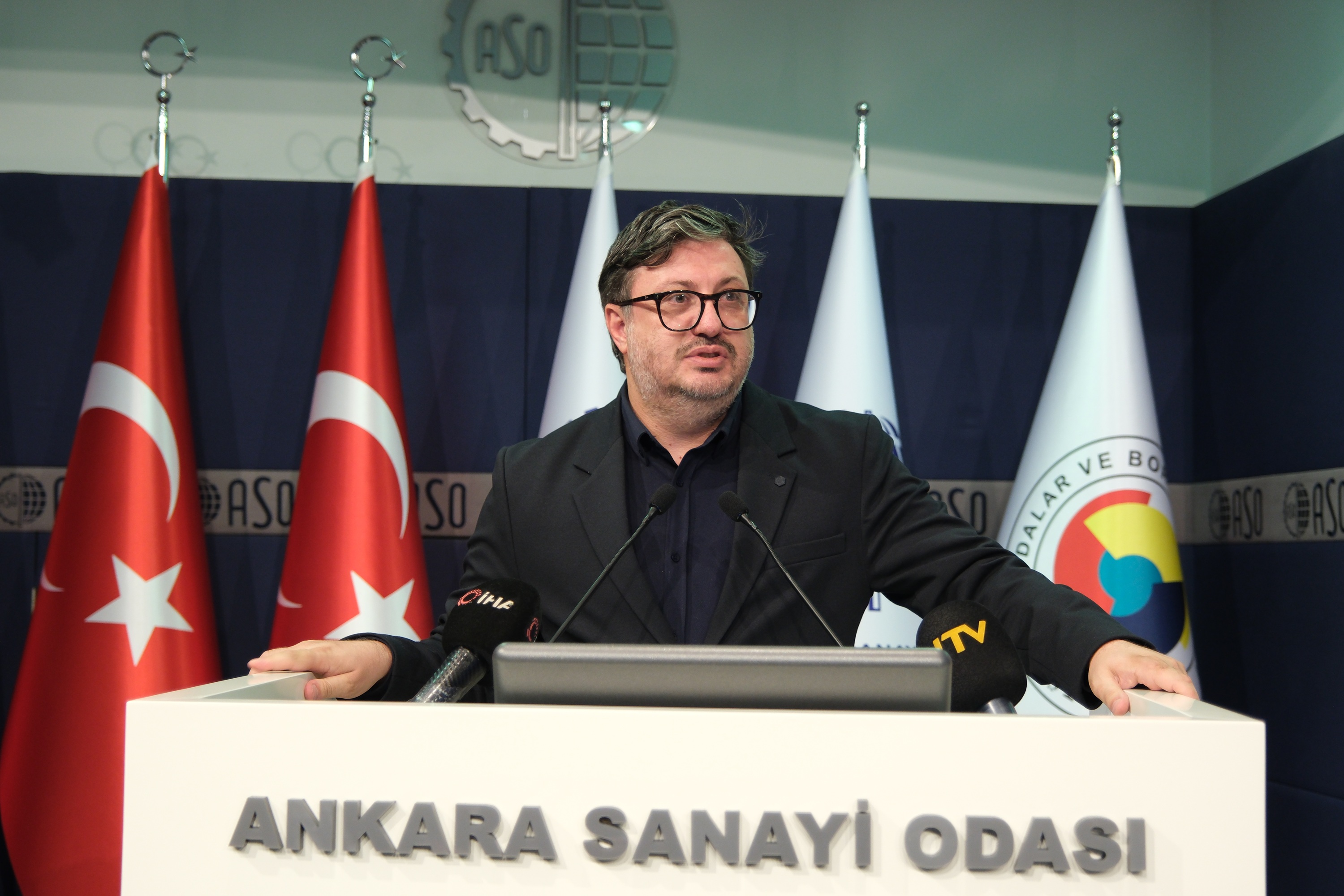
Speaking at the panel titled “Transformation, Competence and Competitiveness in Industry: From Twin Transformation to the Nuclear Supply Chain,” hosted by the Ankara Chamber of Industry, ACI Chairman Seyit Ardıç stated that being included in the nuclear supply chain means “moving to a higher league” for industry, and said, “As the Ankara Chamber of Industry, we saw this potential years ago; in 2017, we established NÜKSAK, Türkiye’s first and only nuclear industry cluster.” Stating that NÜKSAK prepares companies for global supply chains by bringing them together around common goals and standards, Chairman Ardıç said, “The real strength of clustering is not merely bringing companies together under the same roof, but enabling them to act together and share knowledge and experience.” Chairman Ardıç also noted, “True localization means making the competence to develop and produce that product permanent and being able to sell it to global markets.” Yapıştırılan markdown
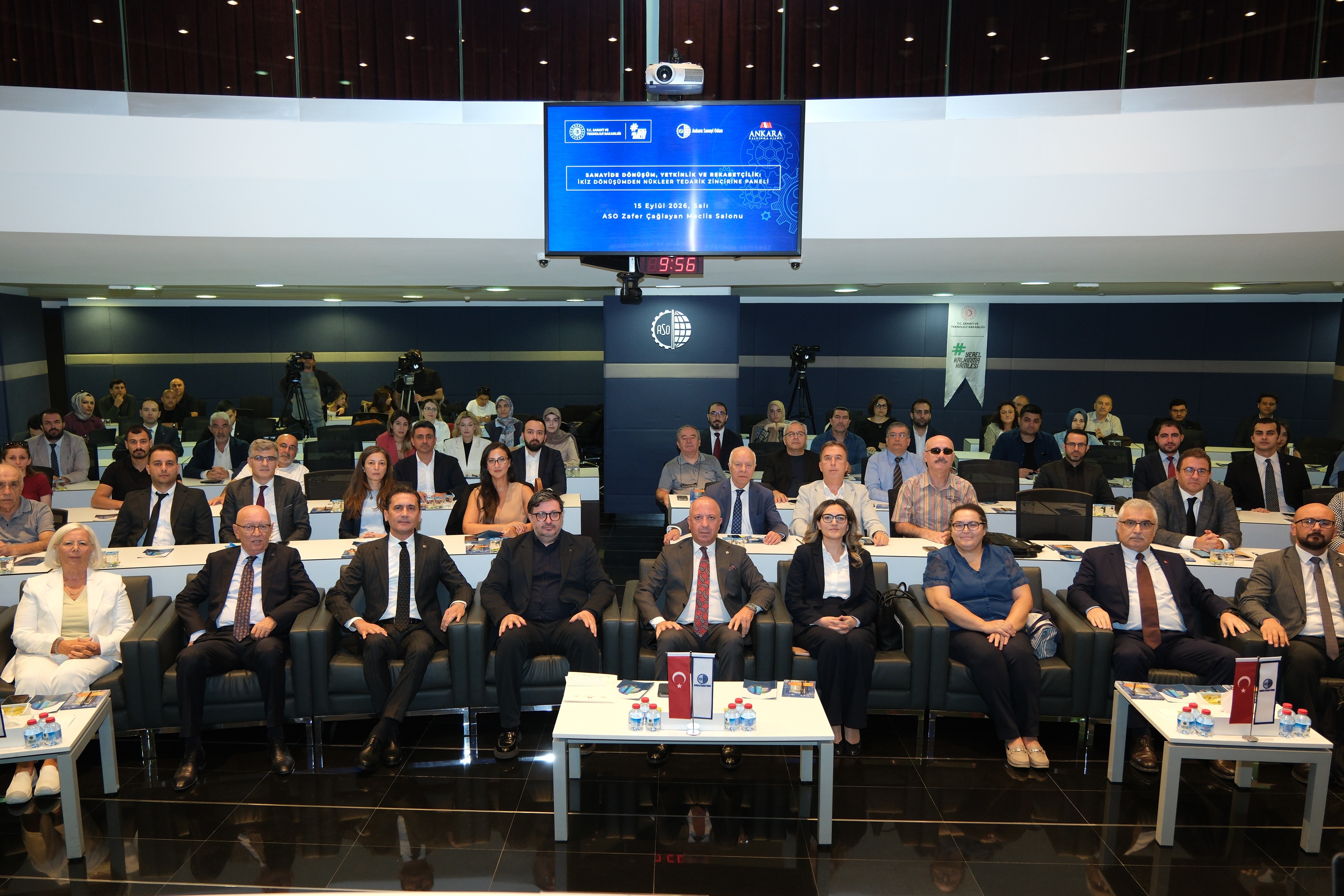
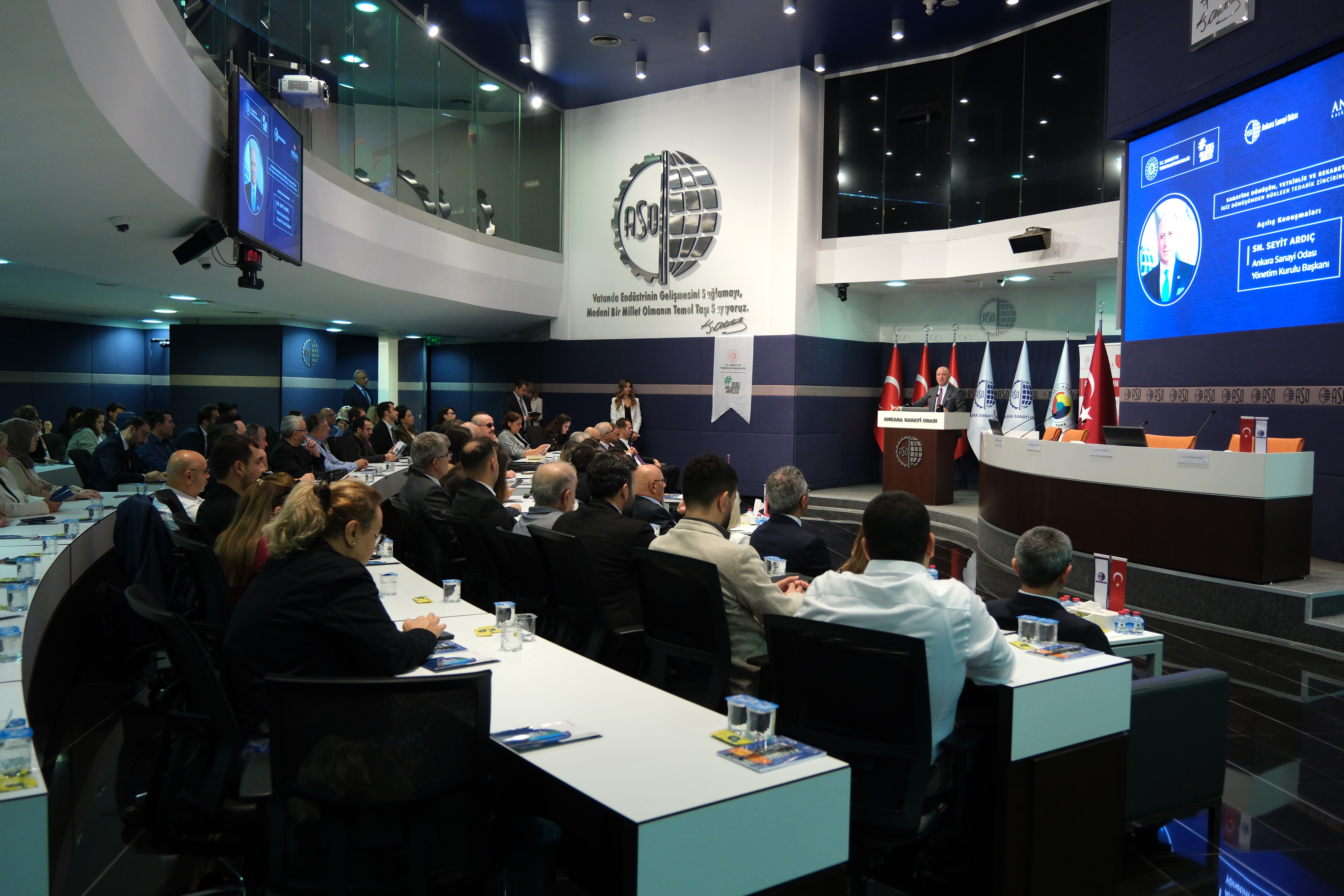
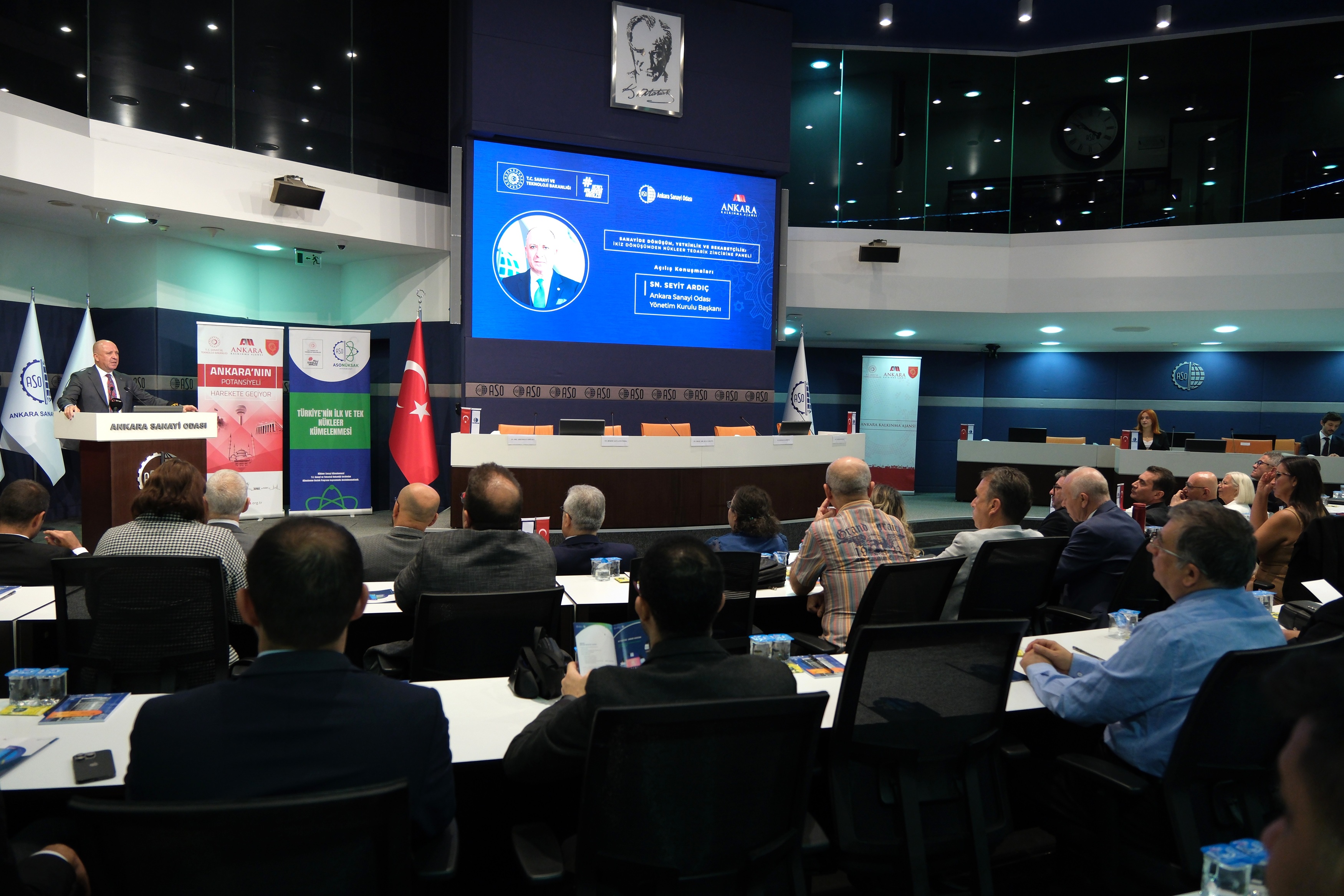
The Ankara Chamber of Industry (ACI) hosted the event titled “Transformation, Competence and Competitiveness in Industry: From Twin Transformation to the Nuclear Supply Chain.” Organized with the contributions of the Ministry of Industry and Technology, the Ankara Development Agency and Türkiye Nuclear Energy Inc., the event brought together representatives from the public sector, academia and the business world. At the program, where ACI Chairman Seyit Ardıç, Director General of R&D Incentives Dr. Damla Turan and Ankara Development Agency Secretary General Assoc. Prof. Dr. Duhan Kalkan delivered opening speeches, the experiences of NÜKSAK member companies in the nuclear supply chain and the results obtained within the scope of the “Project for Increasing the Twin Transformation Capacity of Industry through the Use of Domestic Technology,” carried out with the technical support of the Ankara Development Agency, were discussed.
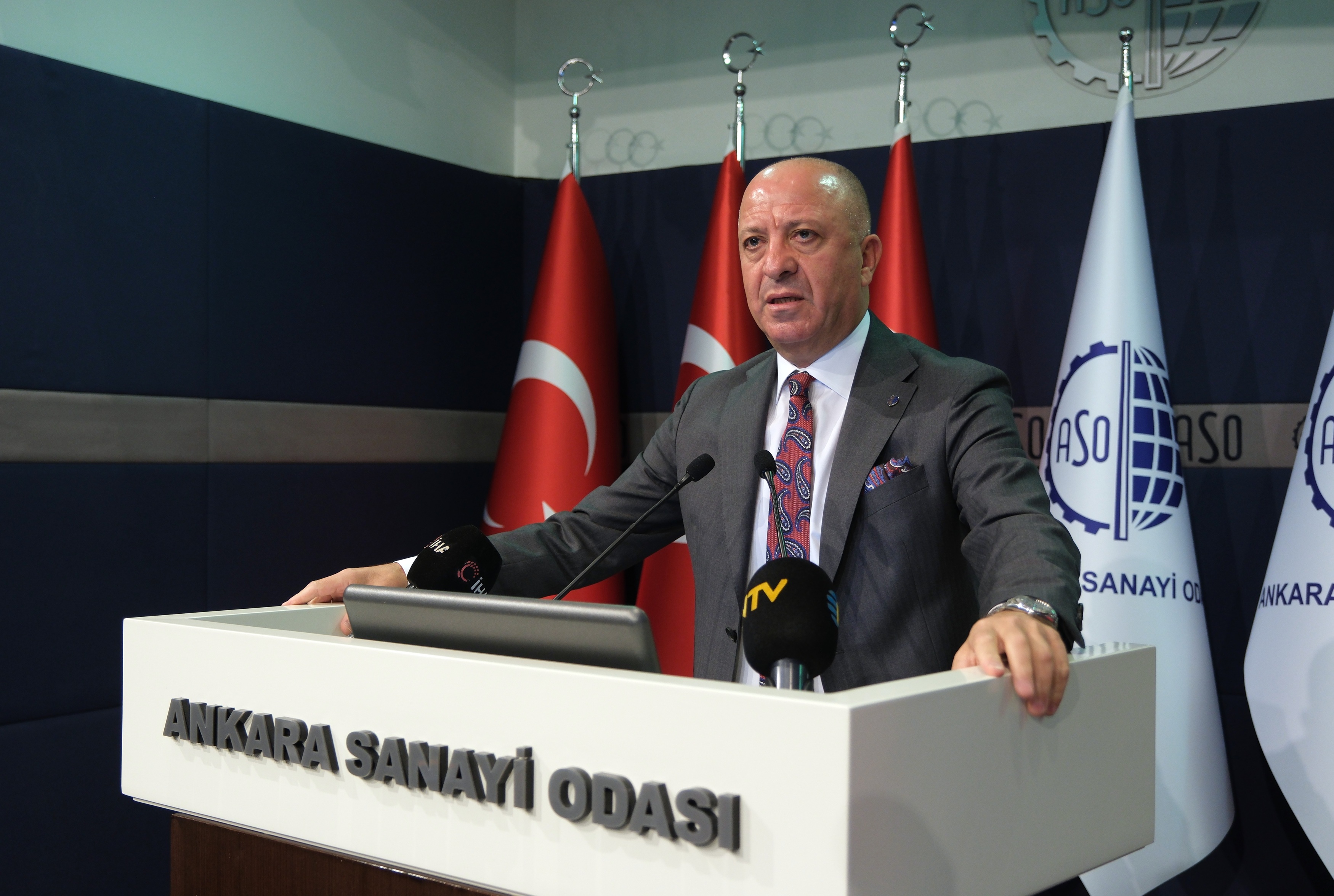
In his speech, ACI Chairman Seyit Ardıç shared his assessments on the changing conditions of competition in industry, green and digital transformation, the nuclear supply chain and clustering policies. Stating that transformation in industry directly affects Türkiye’s position in the global production race, Ardıç said:
“Today, while discussing transformation in industry, we are actually putting a much larger issue on the table: Türkiye’s position in the global production race. Because the conditions of competition in industry are changing rapidly. While cost, price and production capacity were once the main elements of competition, today technology, productivity, energy security, carbon intensity, data and supply chain resilience have been added to these. The main components of moving up a class in industrial production are investment, productivity and technology. Therefore, as a country, not only our production volume but also how much added value we can create with one unit of energy, one hour of labor and one unit of capital has become decisive.”
PRODUCTIVITY IS THE INVISIBLE CAPITAL OF OUR INDUSTRIALISTS
Drawing attention to the increase in productivity in the manufacturing industry and emphasizing that this gain must be made permanent, Chairman Ardıç said, “In the second quarter of 2026, production per person employed in industry increased by 3.7 percent annually, while in the manufacturing industry it increased by 4.3 percent. We have to make this gain permanent. Because in an environment where financing, energy and labor costs are high, productivity is the invisible capital of our industrialists.”
Stating that another important dimension of competitiveness is the technological level of production, Chairman Ardıç said that the share of high-technology products in manufacturing industry exports was 3.7 percent in the first seven months of 2026, while their share in imports was 12.1 percent. Noting that in Ankara, the share of high-technology products in manufacturing industry exports exceeded 13 percent, while the share in imports stood at around 21 percent, Chairman Ardıç said, “These data show that the technology gap directly affects our competitiveness and foreign trade balance. While increasing our production power, we must also raise the technological level and added value created by our industry. Green and digital transformation, energy and industrial policies are now complementary elements of the same competitiveness strategy.”
“THE GOAL IS TO MOVE FROM MEASURING CARBON TO REDUCING IT, AND TO INCREASING PRODUCTIVITY AND ADDED VALUE”
Recalling that the European Union Carbon Border Adjustment Mechanism entered the period of financial obligations as of January 1, 2026, and that a new era has begun in Türkiye with the publication of the Emissions Trading System Regulation following the Climate Law, Chairman Ardıç said, “Carbon is no longer merely an emission coming out of a chimney; it is a cost reflected on the balance sheet, a criterion encountered in market entry, and a competitive factor affecting investment decisions.”
Referring also to the research report prepared by ACI titled “Türkiye and Ankara Analysis within the Scope of the Carbon Border Adjustment Mechanism,” Chairman Ardıç stated that as of 2023, products covered by CBAM accounted for approximately 8 percent of Türkiye’s total exports and approximately 7 percent of Ankara’s exports. Chairman Ardıç continued:
“In an environment where access to finance is difficult and costly, it creates a serious financial burden for our companies to continue production while simultaneously implementing investments in digitalization, energy infrastructure and carbon reduction. Therefore, we should not see green transformation merely as a compliance expense. When managed correctly, energy efficiency reduces costs, digitalization reduces errors, data management optimizes production, and low-carbon production provides our companies with a new competitive advantage in export markets. Our real goal should be to move from measuring carbon to reducing it, and to increasing productivity and added value.”
Stating that 10 ACI member companies were directly worked with within the scope of the twin transformation project carried out with the technical support of the Ankara Development Agency, Chairman Ardıç said that training and consultancy activities were carried out on carbon and water footprint and CBAM reporting using domestic software infrastructure. Emphasizing that ACI’s priority is not only for its members to comply with regulations, but also for them to acquire a structure that produces its own data, sees productivity losses and can measure its transformation, Chairman Ardıç said, “The productivity gap begins in the factory; its impact extends from production costs to export power, and from there to the country’s current account balance.”
ENTERING THE NUCLEAR SUPPLY CHAIN MEANS MOVING TO A HIGHER LEAGUE
Stating that nuclear energy is one of the strategic areas where energy and industrial policies intersect, Chairman Ardıç said that viewing nuclear energy only in terms of electricity generation would mean missing a major industrial opportunity. Chairman Ardıç made the following assessment:
“Nuclear energy creates a very broad production ecosystem, from engineering to special steel, from valves to pumps, from welding technologies to software, and from quality systems to testing and certification. Therefore, being included in the nuclear supply chain means moving our industry to a higher league. The conditions for entering this league are demanding. It requires quality, traceability, certification, human resources and production discipline. However, a company that meets these standards not only gains competence in the nuclear field, but also increases its capacity to enter global supply chains in defense, aviation, energy and advanced machinery industries.”
Recalling that ACI established NÜKSAK, Türkiye’s first and only nuclear industry cluster, in 2017 based on this potential, Chairman Ardıç stated that through NÜKSAK, they are working to enable companies to reach international quality and certification standards, closely understand the nuclear ecosystem and access global supply chains. Chairman Ardıç noted that NÜKSAK being deemed eligible for support by the Ministry of Industry and Technology for the second time is highly valuable in terms of ensuring the continuity of the work that has begun and taking companies to a more advanced level in the nuclear supply chain. He thanked the Ministry, particularly the Directorate General of R&D Incentives, for this strong cooperation.
Emphasizing that their goal is for Turkish industrialists not only to provide goods and services to nuclear power plants to be established in Türkiye, but also to achieve a permanent position in the global nuclear supply chain, Chairman Ardıç continued:
“We aim for a part, equipment or engineering solution produced in Ankara to be used in projects in different geographies around the world, from Europe to Asia. Because true localization goes beyond using domestic products in a project; it means making the competence to develop and produce that product permanent and being able to sell it to global markets.”
CLUSTERING SUPPORTS SHOULD BE CARRIED OUT WITH A HOLISTIC STRUCTURE
Stating that the experience gained through NÜKSAK demonstrates the importance of clustering policies in the transformation of industry, Chairman Ardıç said that the ability to carry out R&D projects and internationalization activities directly within the scope of previous Clustering Support Programs provided clusters with significant room for action. Chairman Ardıç noted that with the 4th Clustering Support Program, R&D activities were directed to TÜBİTAK mechanisms, while overseas delegations were directed to the supports of the Ministry of Trade, leading activities to be carried out through different support channels. He said:
“The strength of clustering does not lie in conducting supports through different channels, but in integrating companies around common goals. Therefore, we believe it is important to preserve a holistic and flexible support structure in which core activities, from R&D to internationalization, can be planned in line with the cluster’s own priorities.”
Emphasizing that technoparks are also a successful example of this approach, Chairman Ardıç said, “The presence of companies, universities, researchers and qualified human resources in the same location and in constant interaction accelerates knowledge and technology transfer. We need to expand this spatial and relational clustering model to advanced machinery, energy, health and other strategic production areas. Because lasting competitiveness in high technology is created not by individual successful companies alone, but by production ecosystems that learn and scale together.”
“THE SUCCESS ACHIEVED IN DEFENSE SHOULD BE CARRIED INTO NUCLEAR ENERGY TECHNOLOGIES”
Stating that they find it highly valuable to carry the success achieved in domestic technology development in the defense and aviation industries into nuclear energy technologies, Chairman Ardıç said:
“The work carried out by TMRS Energy under the leadership of Baykar Chairman Selçuk Bayraktar on small modular reactor technologies is important in showing that our private sector can be not only a supplier in the nuclear field, but also an actor that develops technology and designs and produces original products. Türkiye needs bold technology initiatives that will open the way in this field. I would like to thank Mr. Bayraktar and the TMRS Energy team for this vision and for their work to develop our country’s nuclear technology capabilities.”
THE QUALITY OF PRODUCTION IS AS IMPORTANT AS THE QUANTITY
Emphasizing that industrial policy should be evaluated not only through the quantity of production, but also through the quality of production, Chairman Ardıç concluded his speech with the following questions:
“How efficiently do we produce? How much technology do we produce? How much domestic input do we use? How low-carbon is our production? And how much of the value we produce do we retain in our country? The answers we give to these five questions will determine which league Türkiye will be in within industry.”
Following the opening speeches, the program continued with the ACI NÜKSAK presentation, the Nuclear Energy Supplier Information System presentation, the Panel on Localization and Industrial Competencies in the Nuclear Supply Chain, the presentation on the Impact of CBAM on Exports and Ankara, and the Panel on the Twin Transformation of Industry through the Use of Domestic Technology.
LOCALIZATION AND INDUSTRIAL COMPETENCIES IN THE NUCLEAR SUPPLY CHAIN WERE DISCUSSED
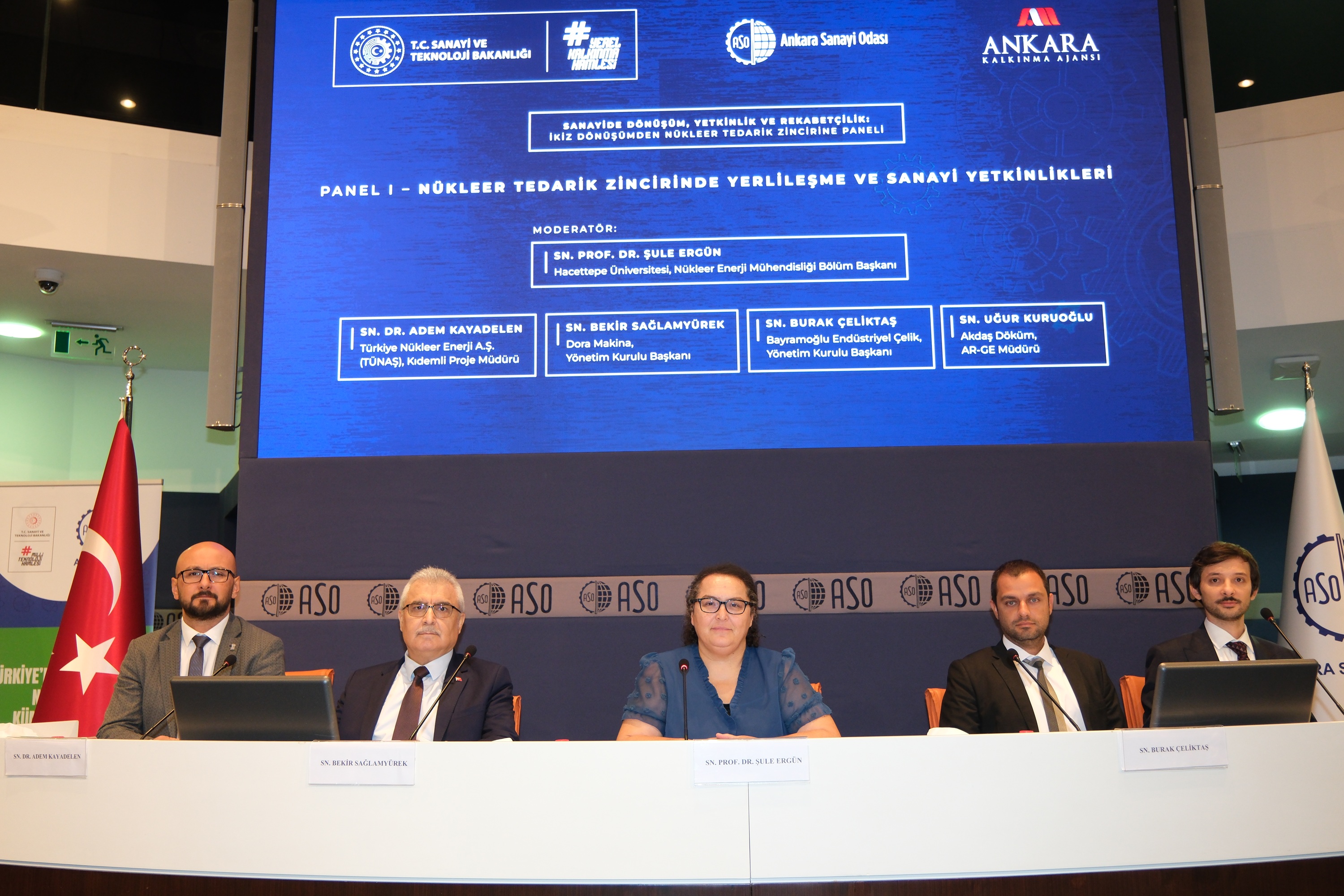
The first panel of the program was moderated by Prof. Dr. Şule Ergün, Head of the Department of Nuclear Energy Engineering at Hacettepe University. In the panel titled “Localization and Industrial Competencies in the Nuclear Supply Chain,” Dr. Adem Kayadelen, Senior Project Manager at Türkiye Nuclear Energy Inc. (TÜNAŞ); Bekir Sağlamyürek, Chairman of Dora Makina; Burak Çeliktaş, Chairman of Bayramoğlu Endüstriyel Çelik; and Uğur Kuruoğlu, R&D Manager of Akdaş Döküm, shared their experiences in the nuclear supply chain and their work in this field.
THE TWIN TRANSFORMATION OF INDUSTRY, COMPANIES’ EXPERIENCES AND GOOD PRACTICE EXAMPLES WERE EVALUATED
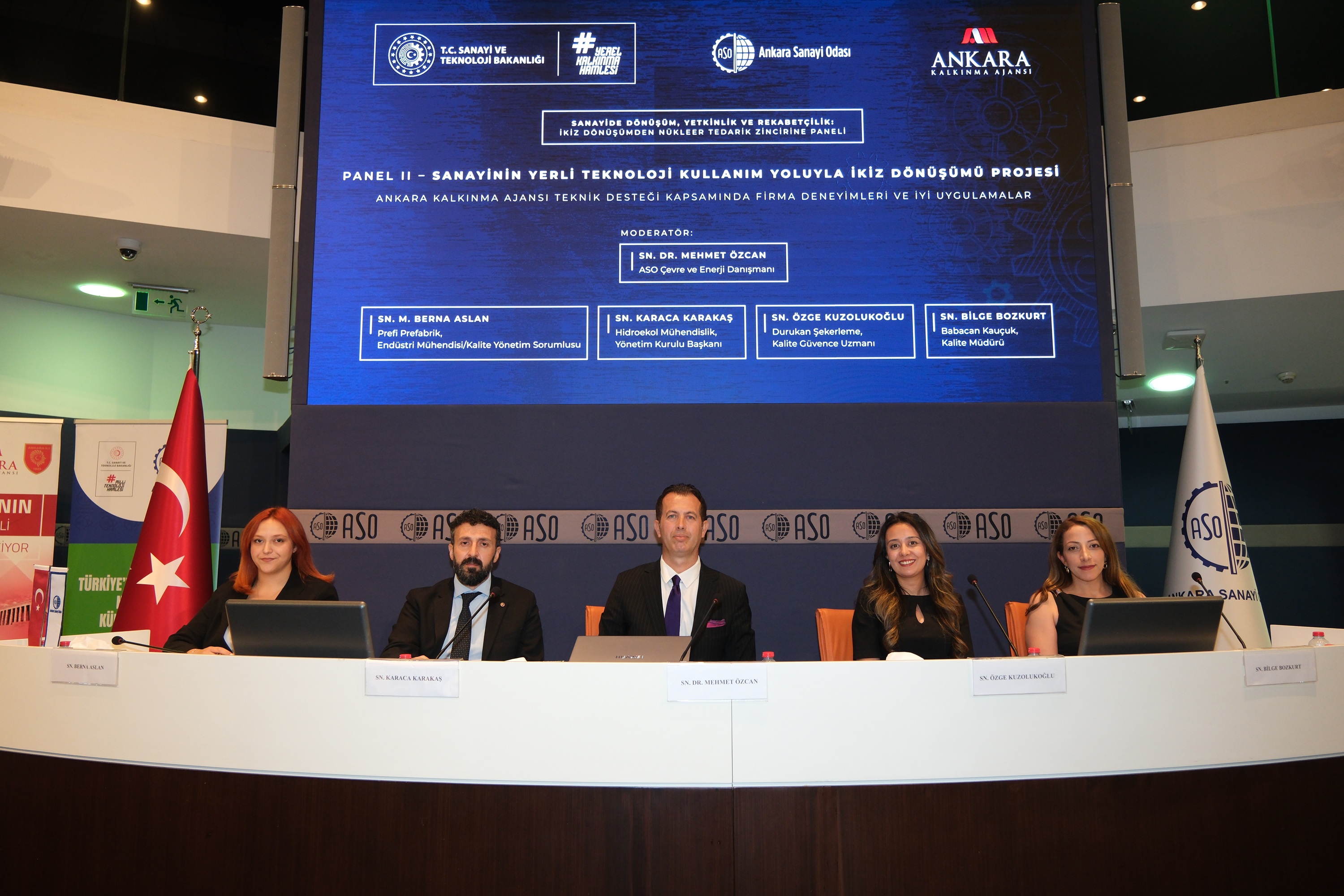
The second panel addressed the work carried out within the scope of the “Project for the Twin Transformation of Industry through the Use of Domestic Technology.” Moderated by ACI Environment and Energy Advisor Dr. Mehmet Özcan, the panel evaluated companies’ experiences and good practice examples within the scope of the technical support provided by the Ankara Development Agency.
During the panel, Prefi Prefabrik Industrial Engineer and Quality Management Officer M. Berna Aslan, Hidroekol Mühendislik Chairman Karaca Karakaş, Durukan Şekerleme Quality Assurance Specialist Özge Kuzolukoğlu and Babacan Kauçuk Quality Manager Bilge Bozkurt shared their companies’ experiences, practices and results obtained in the twin transformation process with the participants.
As part of the program, presentations were also delivered by ACI Environment and Climate Change Manager Gözde Yakın on “The Impact of CBAM on Exports and Ankara,” by NÜKSAK Specialist Hasan Töre Silis on “ACI Nuclear Industry Cluster (NÜKSAK),” and by Hakan Hatipoğlu, Nuclear Industry Development Coordinator at the Ministry of Energy and Natural Resources of the Republic of Türkiye, on the “Nuclear Energy Supplier Information System (NETBİS).”