ASO CHAIRMAN ARDIÇ:
“COMPANIES ARE FOUNDED BY PEOPLE, BUT THEY SURVIVE THROUGH SYSTEMS”
“INSTITUTIONALIZATION WILL DIRECTLY DETERMINE COMPETITIVENESS”
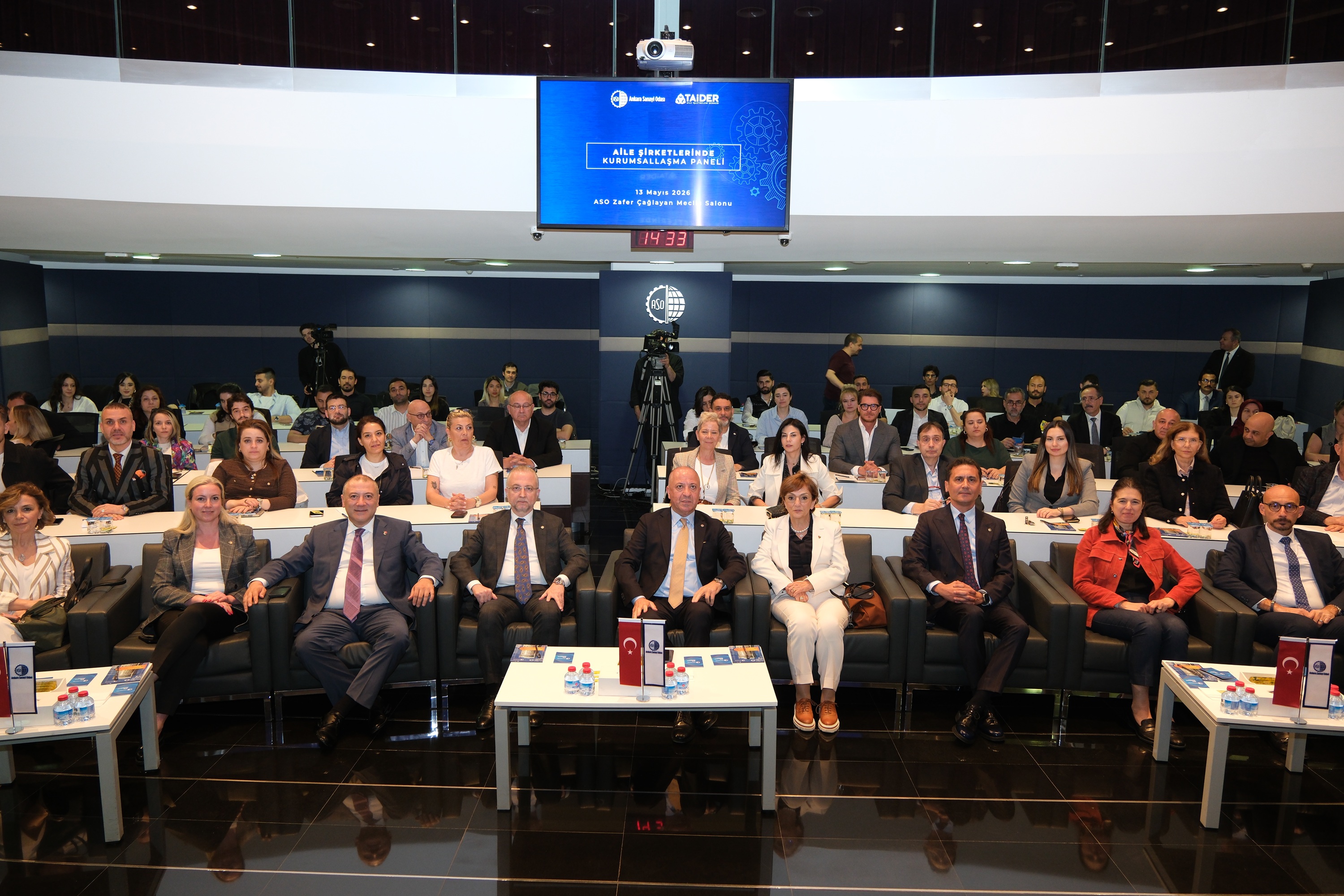
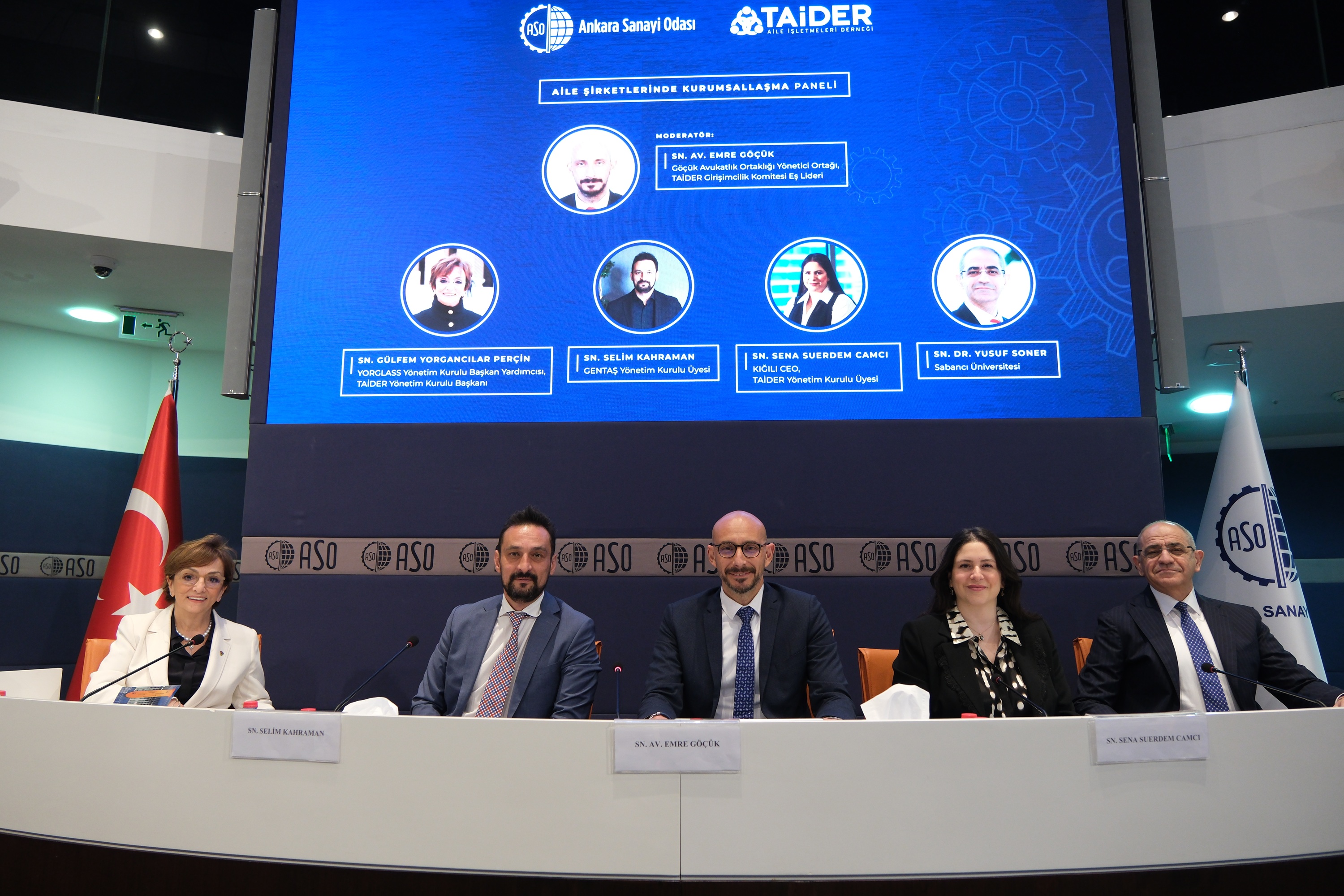
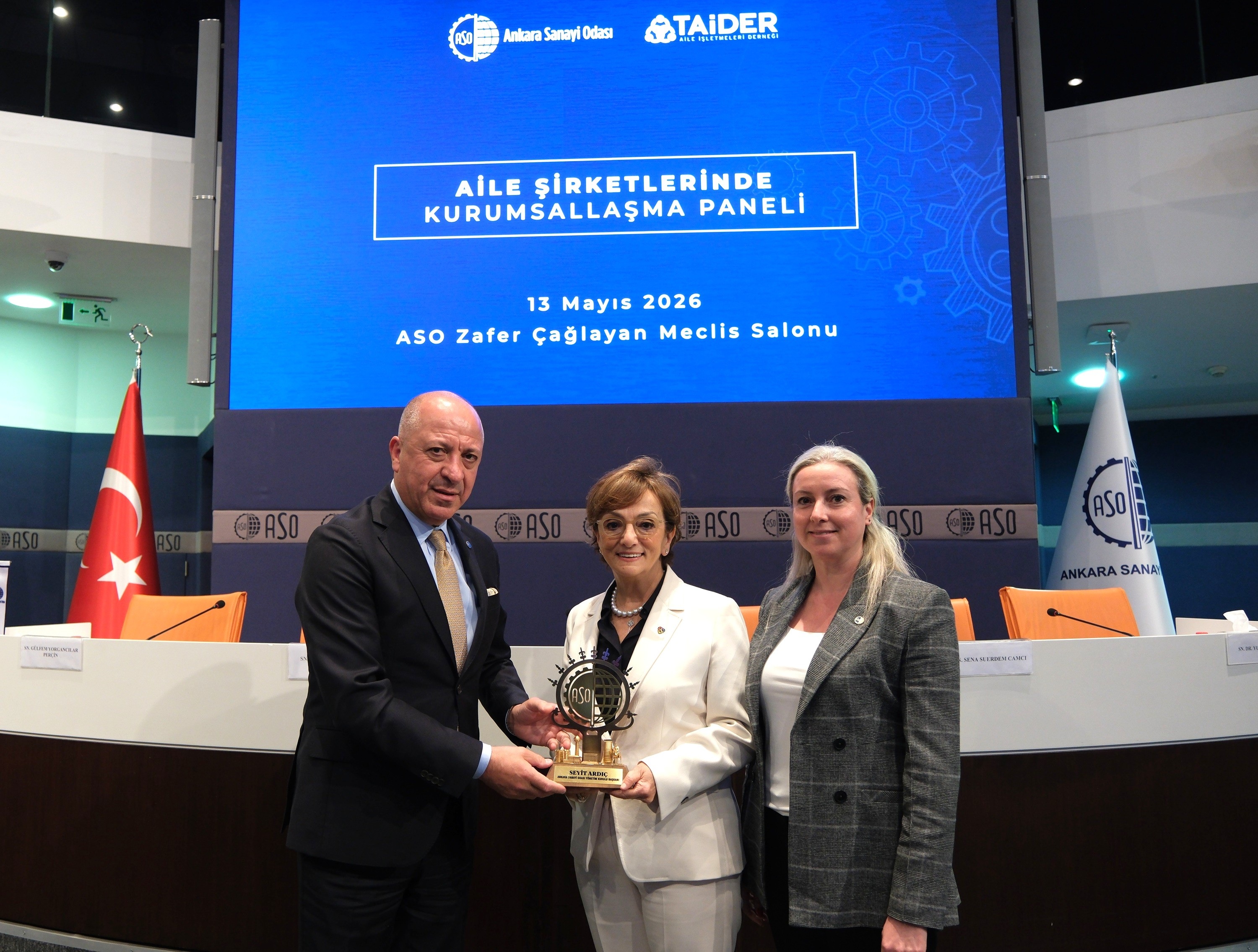
The “Institutionalization in Family Businesses Panel,” organized in cooperation between the Ankara Chamber of Industry (ASO) and the TAİDER Family Business Association, was held at the ASO Zafer Çağlayan Assembly Hall.
The panel, which addressed topics such as sustainable growth in family businesses, corporate governance, professionalization, intergenerational transition, and enhancing companies’ long-term competitiveness, was organized jointly by the Ankara Chamber of Industry and TAİDER.
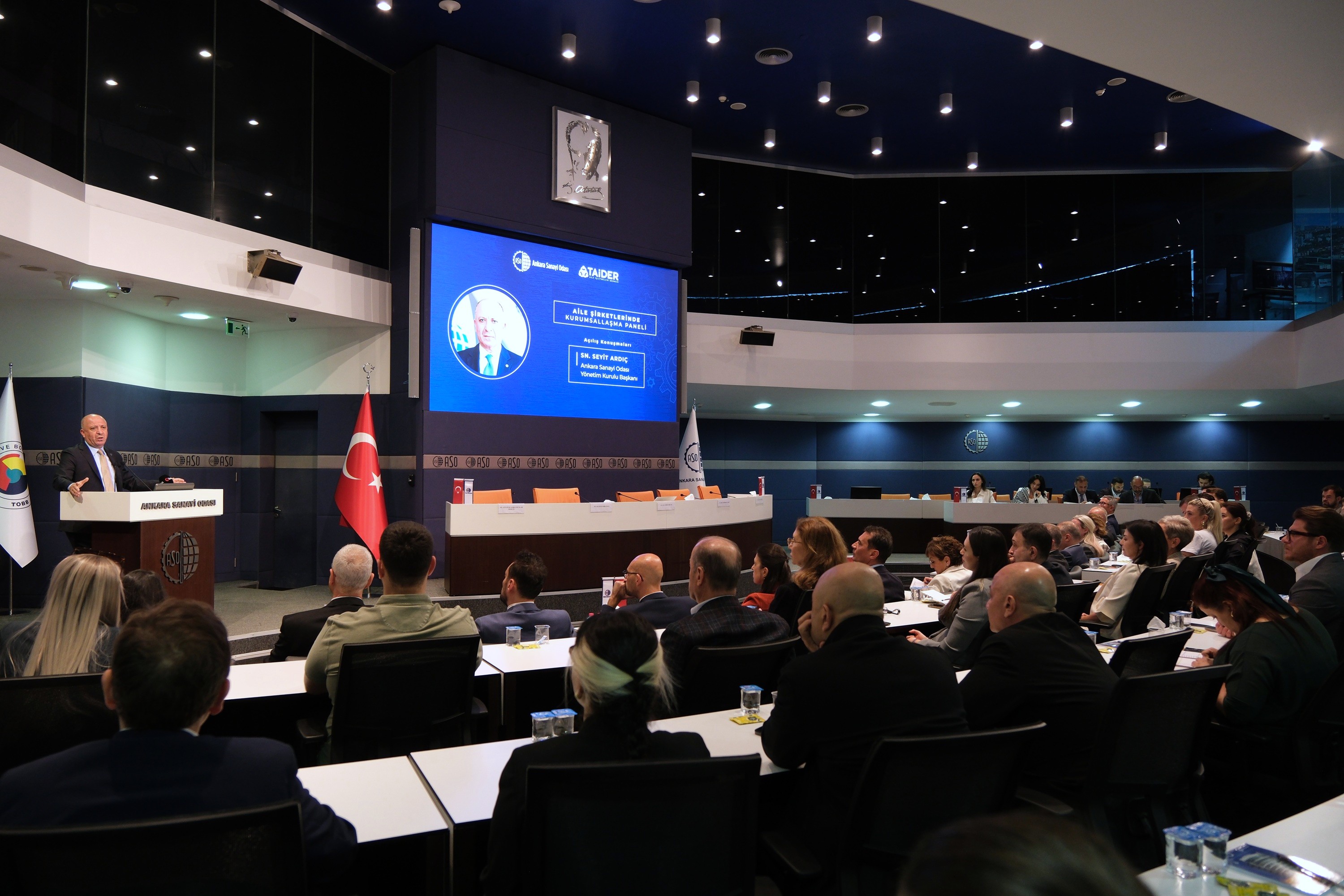
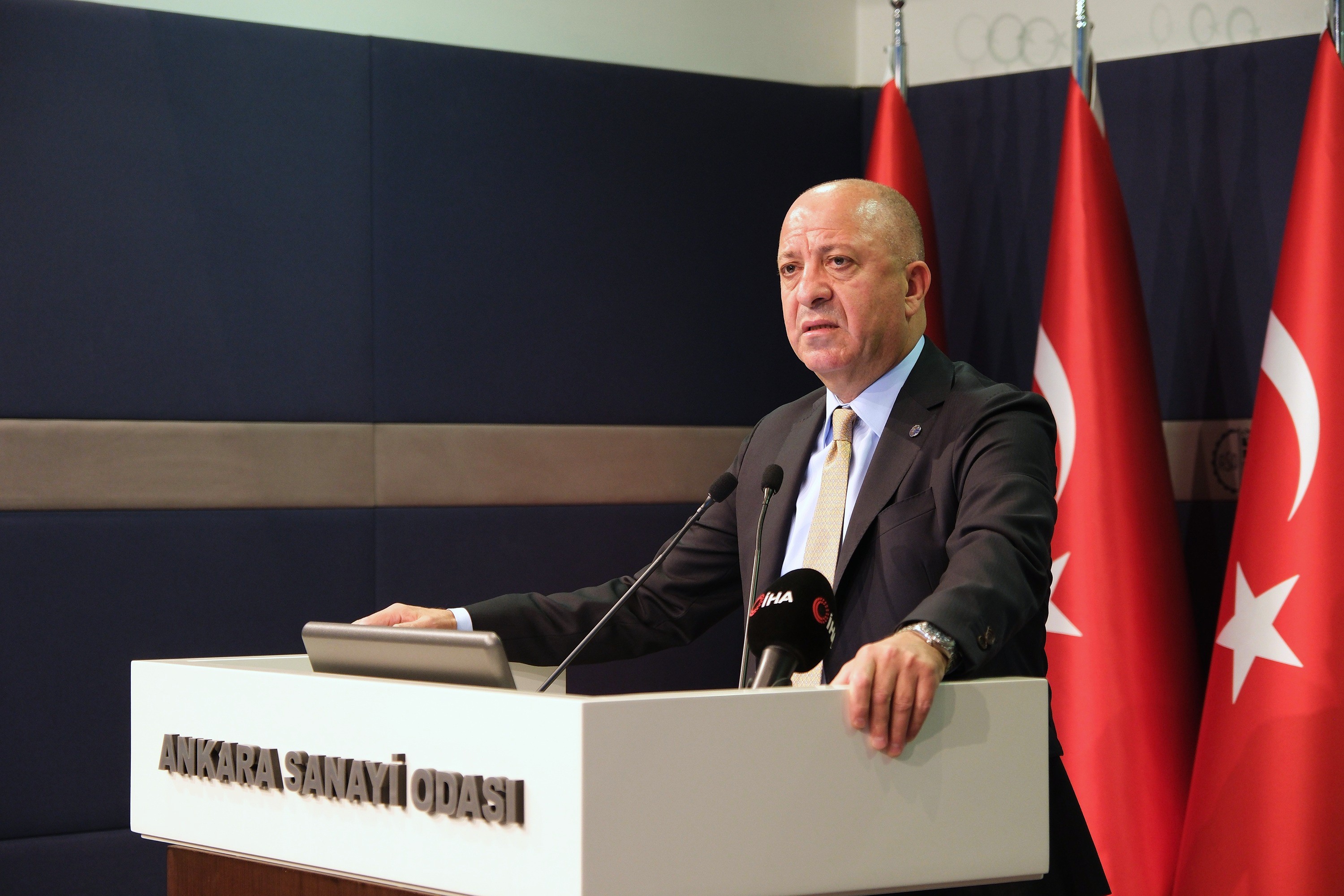
Speaking at the opening of the program, ASO Chairman Seyit Ardıç emphasized the vital importance of institutionalization for the sustainability of family businesses, stating:
“Companies are founded by people, but they survive through systems. Institutionalization is precisely this; a structure that strengthens family ties and carries them into the future.”
“TODAY, WE ARE NOT ONLY DISCUSSING COMPANY MANAGEMENT, BUT ALSO THE FUTURE OF A PRODUCTION CULTURE”
Chairman Ardıç highlighted the decisive role of family businesses in the Turkish economy, stating:
“Today, we are not merely discussing company management. We are discussing how a production culture can be sustained, how labor can be preserved, and how industrial memory can be transferred to future generations. Many of our businesses were established in small workshops with limited resources but great determination, and over the years they have evolved into organizations employing hundreds and even thousands of people.”
Comparing family businesses to a tree, Ardıç stated:
“The founding generation is the root. The second generation is the trunk and the branches; it carries growth, expansion, and the new era. The third generation represents the future and continuity of this tree.”
“THE INDUSTRIAL HISTORY OF OUR COUNTRY IS NOT THE HISTORY OF ESTABLISHED COMPANIES, BUT OF COMPANIES THAT HAVE SURVIVED”
Chairman Ardıç emphasized that approximately 95 percent of companies in Türkiye are family businesses, noting that nearly 75 percent of employment, as well as a significant portion of production and exports, are generated by these companies.
He also pointed out that family businesses worldwide face serious challenges during generational transitions.
“Approximately 30 percent of family businesses survive into the second generation, while only 10 to 15 percent reach the third generation. Therefore, beyond establishing companies, producing, and creating employment, it is equally important to develop a management culture capable of sustaining this accumulation across generations.”
Chairman Ardıç added:
“The industrial history of our country is not the history of companies that were established, but the history of companies that managed to survive. This is precisely the issue we are discussing today — not merely establishing companies, but ensuring permanence.”
“COMPANIES ARE FOUNDED BY PEOPLE, BUT THEY SURVIVE THROUGH SYSTEMS”
Chairman Ardıç emphasized that one of the most critical issues in family businesses is institutionalization, noting that the overlap between family relationships and company management can lead to serious problems over time.
He continued:
“The greatest challenge facing family businesses today is bringing together the founder’s efforts, the energy of the second generation, and the requirements of the new world within the same system. Family relationships and company management can become intertwined, areas of authority may not be clearly separated, and when succession is not governed by written rules, the future of the company becomes shaped by personal relationships.”
Emphasizing the vital importance of institutionalization for the future of companies, Chairman Ardıç stated:
“Companies are founded by people, but they survive through systems. Institutionalization is exactly this; a structure that strengthens family ties and carries them into the future. Where such a structure does not exist, uncertainty emerges. And uncertainty is one of the most costly factors in company management.”
“INSTITUTIONALIZATION WILL DIRECTLY DETERMINE COMPETITIVENESS”
Chairman Ardıç stated that the technological transformation taking place worldwide is forcing companies to operate in a more planned and systematic manner.
He noted that data management, speed, quality standards, and institutional trust have now become determining factors for companies.
Emphasizing that companies with clearly defined organizational structures, authorities, and responsibilities will be stronger in the new era, Chairman Ardıç said:
“Institutionalization will directly determine competitiveness. Institutionalized companies gain easier access to finance, attract qualified human resources, achieve a more reliable position in international markets, and become more resilient during times of crisis.”
He also stated that going public is one of the important instruments of this process, enabling companies not only to access capital but also to institutional governance standards.
“THE NEW GENERATION MUST UNDERTAKE A ROLE THAT IMPROVES THE EXISTING STRUCTURE”
Chairman Ardıç emphasized that intergenerational transition is one of the most critical issues for family businesses and stated that the new generation should adopt an approach focused not only on inheriting companies, but also on transforming and improving them.
“This is not merely a handover of the flag; it is about carrying that flag even further. The role of the new generation is not to take over the existing structure as it is, but to improve it, expand it, and prepare it for the new era.
However, there is a very critical balance here. Owning a company and carrying the responsibility of managing a company are two different matters. Therefore, meritocracy, clearly defined roles, and a professional management approach are indispensable in family businesses.”
Chairman Ardıç also stated that ASO considers the proper management of intergenerational transition to be highly important.
“In line with this understanding, last year we pioneered the establishment of the Future Generation Industrialists Association with the participation of second-generation representatives of our Board and Assembly Members. Our aim was not merely to bring young people together. Our real objective was to unite experience and innovation on common ground, establish a strong bridge between generations, and ensure that our companies move toward the future in a more prepared manner.
Because we want our young industrialists to undertake roles that open new areas within inherited structures, expand institutional capacity, and lead technological transformation.”
“OUR FAMILY BUSINESSES ARE THE PRODUCTION MEMORY OF THIS COUNTRY”
Chairman Ardıç also referred to the “ASO Family Constitution Guide” prepared by ASO and emphasized its importance.
“A family constitution is more than a document; it is the collective wisdom regarding the future of the company. The conditions under which family members may work within the company, how management will be structured, how generational transitions will be planned, and which mechanisms will operate in the event of disputes should all be clearly defined.”
At the conclusion of his speech, Chairman Ardıç emphasized that family businesses represent Türkiye’s production memory.
“The path to carrying this production heritage into the future lies through institutionalization, a professional management culture, meritocracy, transparency, and collective wisdom. Our family businesses are the production memory of this country. In order to preserve this memory for future generations, we must transform our companies into structures governed not by individuals, but by rules.”
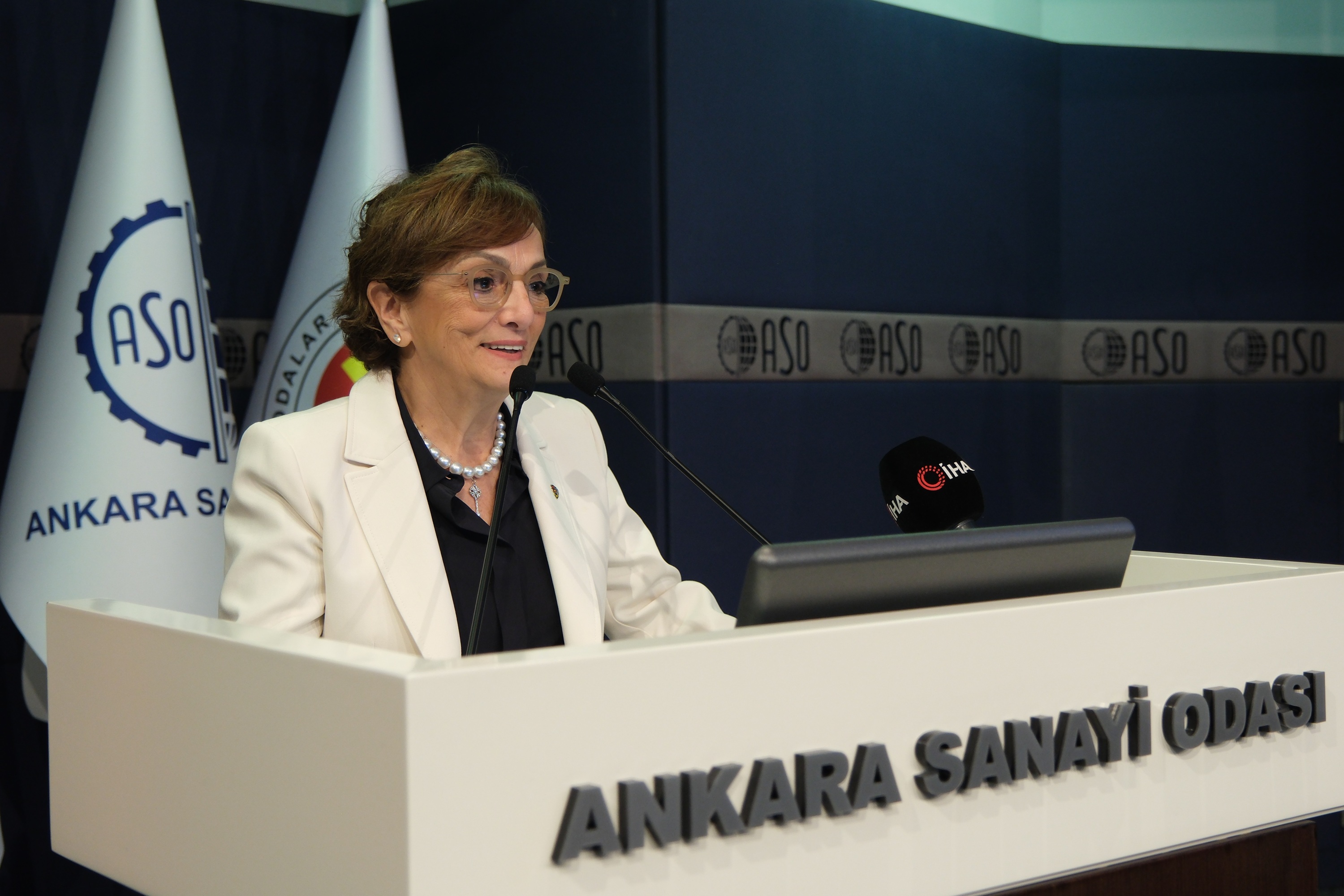
In her speech, TAİDER Chairwoman Gülfem Yorgancılar Perçin also addressed the association’s activities regarding the sustainability of family businesses, strengthening corporate governance understanding, and intergenerational transition processes, while providing information about the association’s work.
Following the opening speeches, the panel was moderated by Attorney Emre Göçük, Managing Partner of Göçük Law Partnership and Co-Chair of the TAİDER Entrepreneurship Committee.
Speakers at the panel included TAİDER Chairwoman of the Board and Vice Chairwoman of the Yorglass Board of Directors Gülfem Yorgancılar Perçin, Gentaş Board Member Selim Kahraman, Kiğılı CEO and TAİDER Board Member Sena Suerdem Camcı, and Sabancı University Lecturer Dr. Yusuf Soner.
The panel, which addressed topics such as sustainable growth in family businesses, corporate governance, professionalization, intergenerational transition, and enhancing long-term competitiveness, was attended by ASO Board Members Mehmet Osmanbeyoğlu, Burcu Özbozkurt, Ertuğrul Onat, as well as many ASO member industrialists.
The program, which attracted significant interest from participants, concluded following the Q&A session.