ASO CHAIRMAN ARDIÇ:
“THE REAL SECTOR DIMENSION OF THE ECONOMIC PROGRAM MUST BE SUPPORTED”
“THE COST OF FALLING BEHIND IN ARTIFICIAL INTELLIGENCE WILL BE THE LOSS OF MARKETS”
“DEINDUSTRIALIZATION DOES NOT ALWAYS ARRIVE WITH GREAT NOISE; SOMETIMES IT COMES SILENTLY. IT IS OUR DUTY TO BREAK THIS SILENCE”
“WE HAVE YET TO ACHIEVE THE EXPECTED LEAP INTO THE HIGH-TECHNOLOGY LEAGUE”
“WE MUST TRANSFORM THE STRONG BALANCE SHEET OF OUR BANKING SYSTEM INTO THE INVESTMENT CAPACITY OF OUR INDUSTRY”
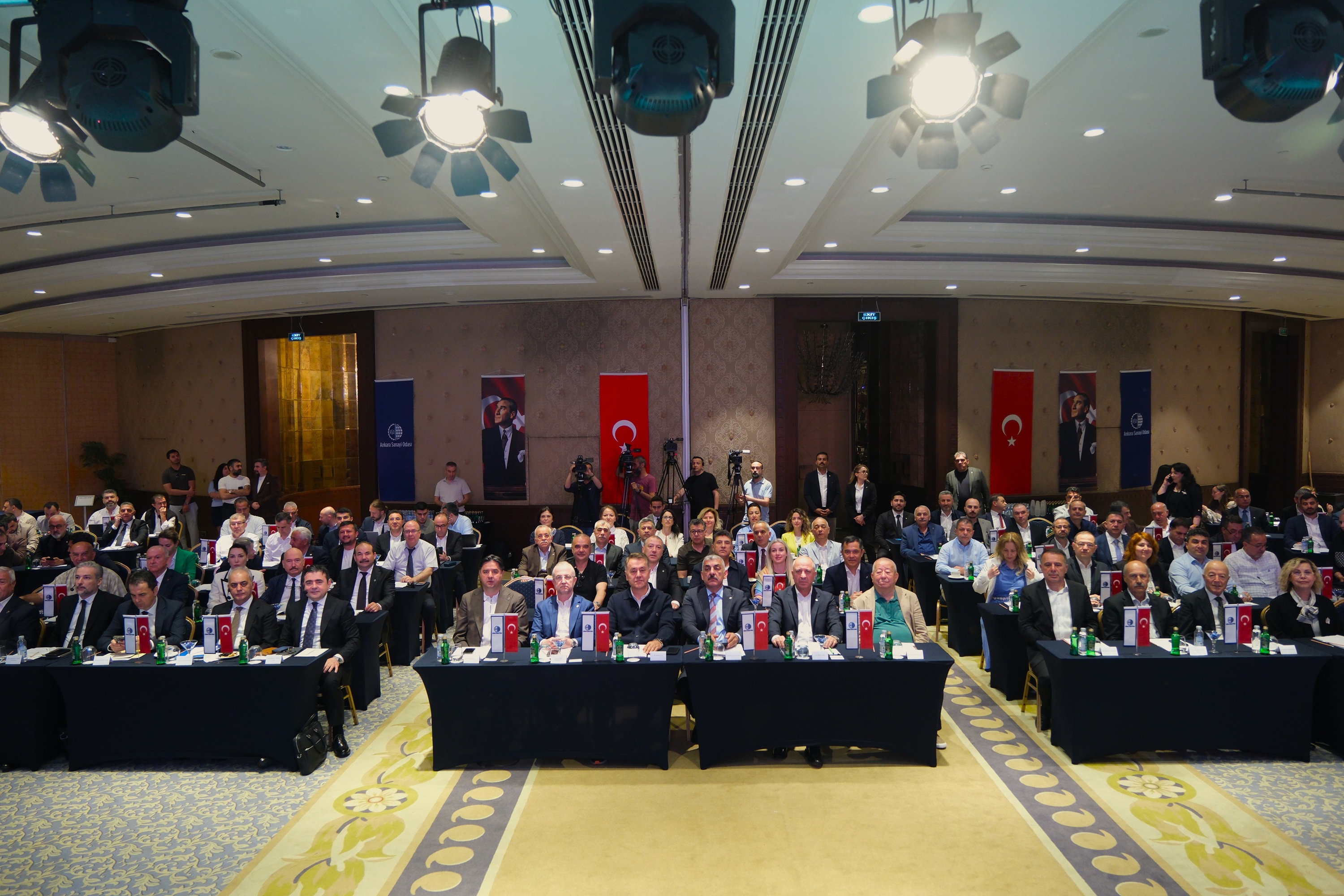
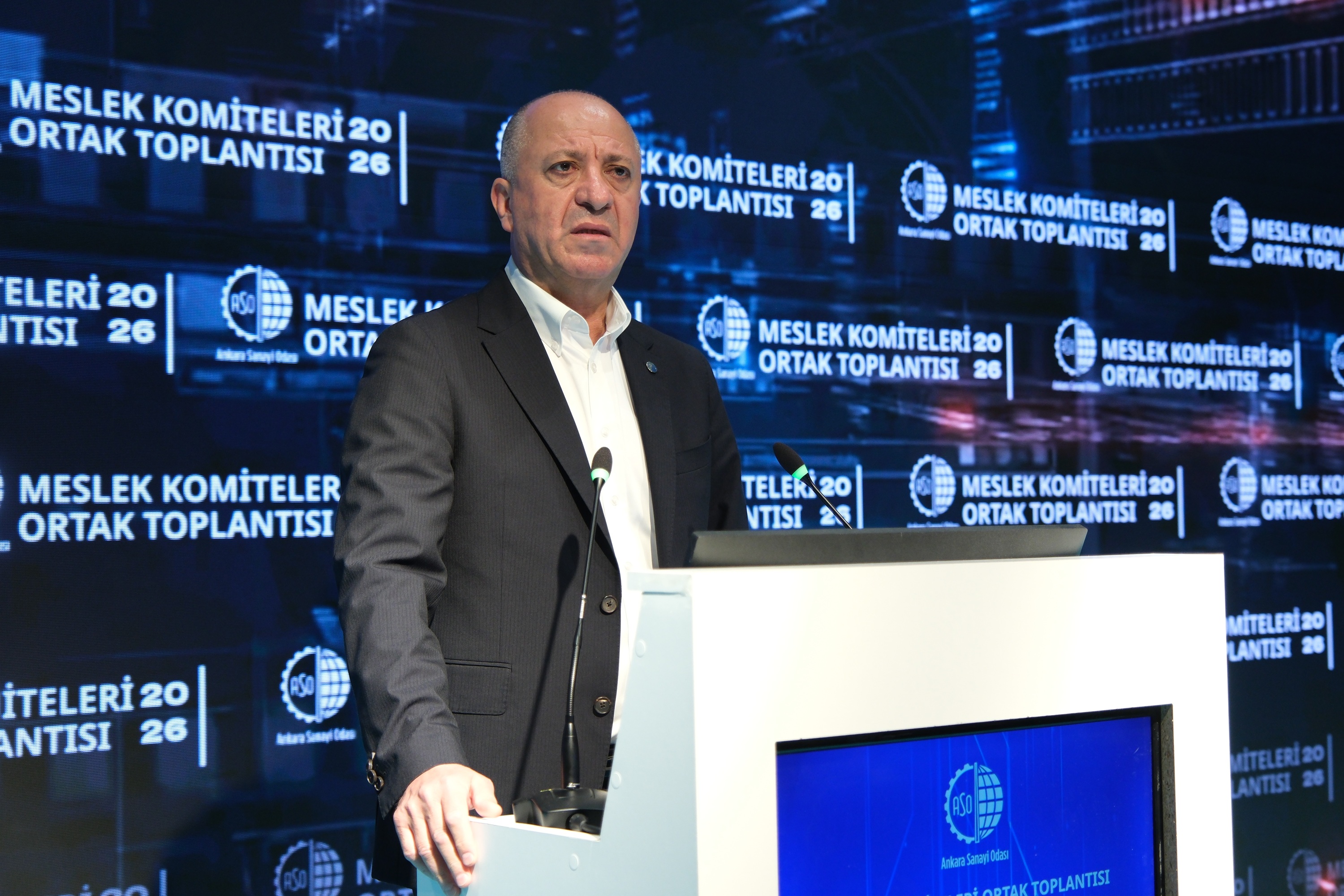
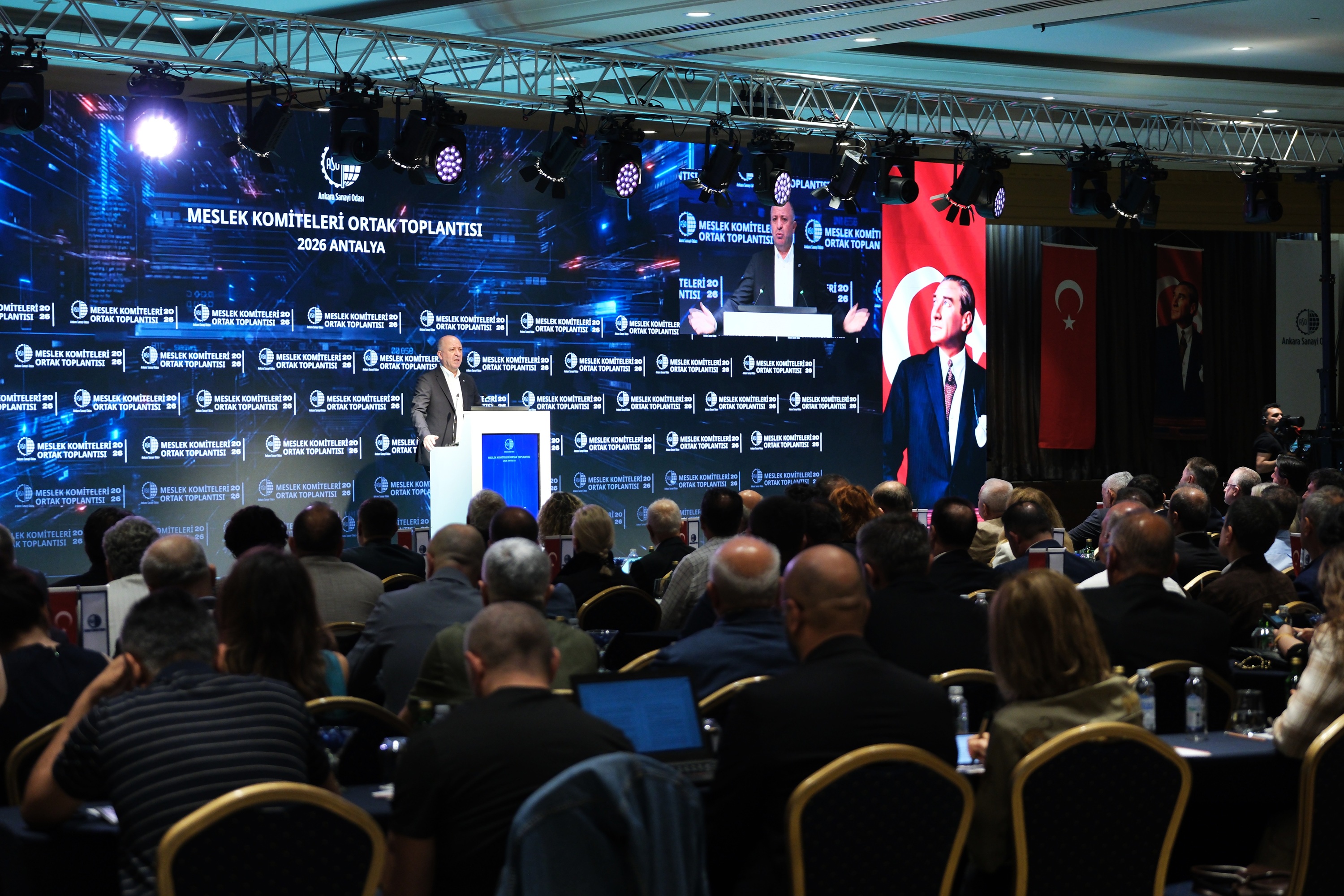
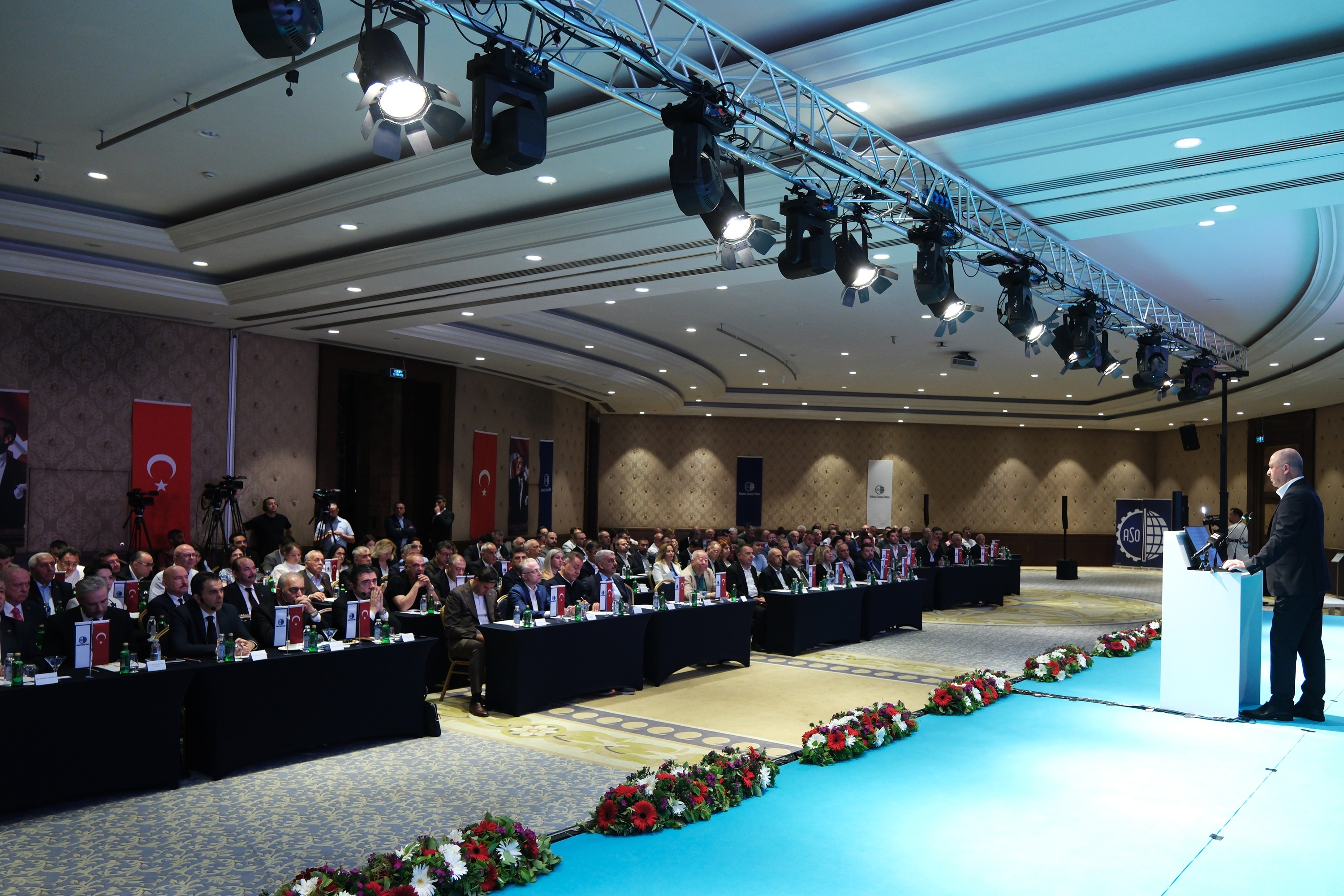
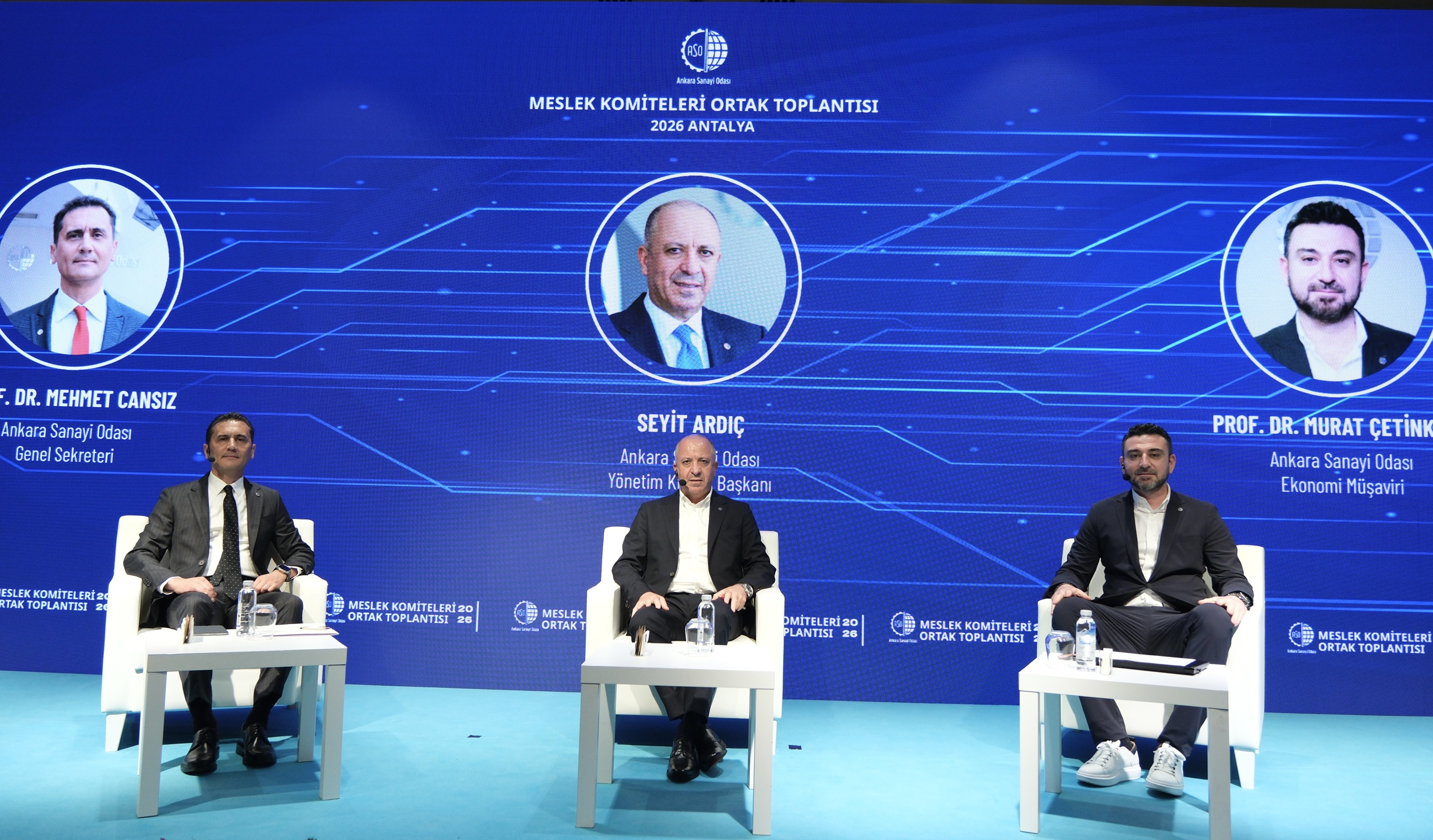
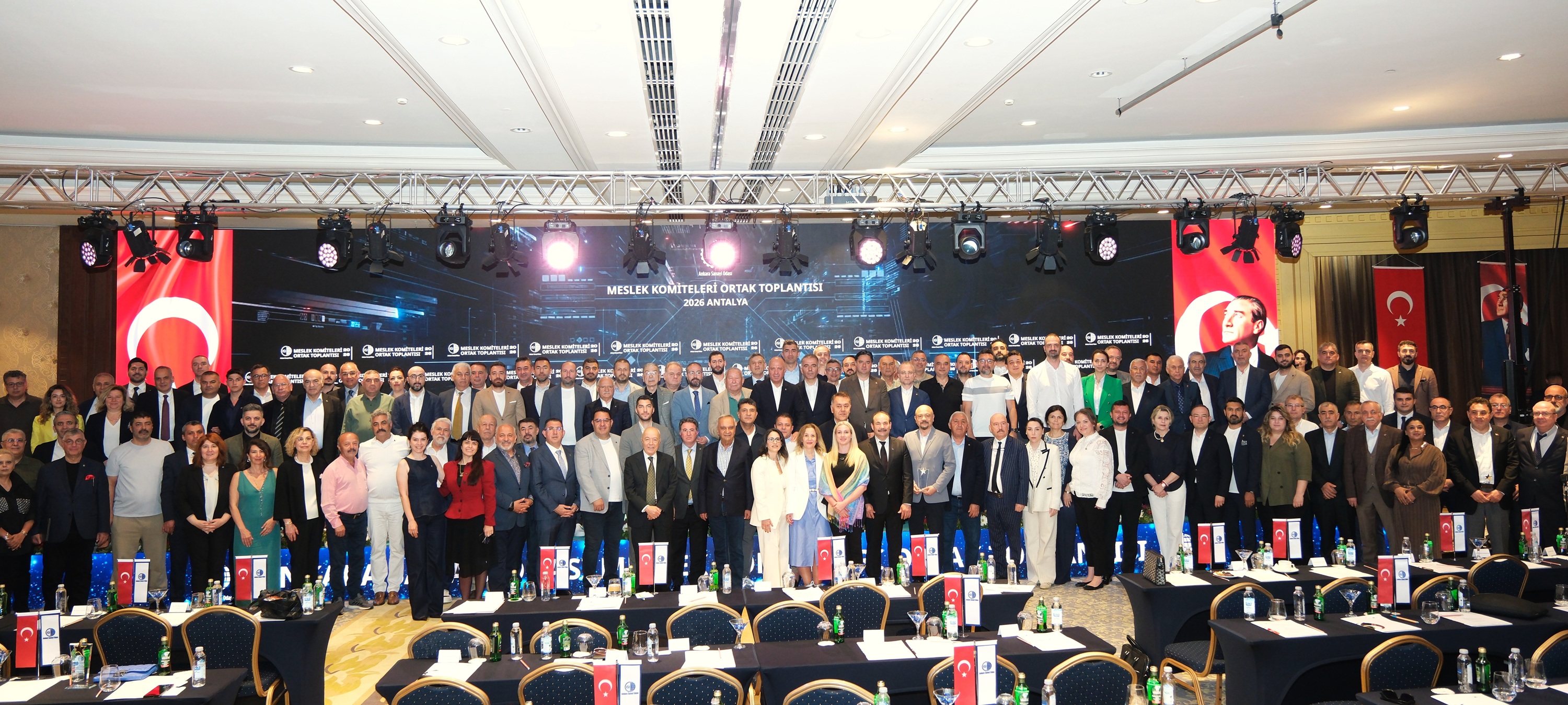
The 1st Joint Meeting of the Professional Committees of the Ankara Chamber of Industry (ASO) for 2026 was held in Antalya. During the meeting, attended by ASO Chairman of the Board Seyit Ardıç together with members of the High Advisory Council, Assembly, and Professional Committees, the demands, challenges, and solution proposals of industrialists were discussed and evaluated.
The meeting, which opened with a speech by ASO Chairman Seyit Ardıç, continued with a panel titled “Industrialists’ Access to Finance,” attended by Deputy General Managers of public banks. The winners of ASO’s “Professional Committees of the Year Awards” were also announced during the event.
In his opening remarks, Chairman Ardıç emphasized the severe pressure created by high interest rate policies on the real sector, stating, “The financing burden already weighing heavily on our industrialists has increased even further due to global developments. The Iran–US–Israel conflict that erupted in our immediate region pushed energy prices up by 60 percent, increased freight and insurance costs, and created new disruptions in supply chains. The resulting uncertainty has increased production costs, as well as energy, raw material, intermediate goods, and delivery times for our industrialists.”
Referring to the current economic outlook, Chairman Ardıç noted that numerous cost pressures and uncertainties are now borne by the real sector and continued as follows:
“THE REAL SECTOR DIMENSION OF THE ECONOMIC PROGRAM MUST BE SUPPORTED”
“We fully support the determination to combat inflation. However, ensuring that this fight is carried out without weakening production, investment, employment, and export capacity is no longer a matter of choice but a necessity. The real sector dimension of the economic program must therefore be supported by strong complementary measures.
Measures that facilitate industrialists’ access to finance, preserve production and export capacity, and offset external shocks in energy and logistics costs must be implemented without delay.”
“WE MUST TALK ABOUT CAPACITY”
Chairman Ardıç stated that the world has entered a new cost structure and that the issue is no longer solely inflation, but rather a new economic order shaped by wars, geopolitical conflicts, energy shocks, and disruptions in logistics.
“Yesterday we talked about costs; today we must talk about capacity.”
He emphasized that wars no longer produce consequences solely on battlefields, but also in insurance premiums, freight rates, exporters’ delivery schedules, energy bills, and central bank decisions.
“This directly affects the costs of our industrialists and the cash flow of our SMEs.”
Chairman Ardıç further noted that sustainable competitive advantage in the new era will depend on talent, technology, productivity, data security, and compliance capacity.
“When exporting products, the question we will face will no longer only be ‘How much did it cost?’ but also ‘How much carbon did you emit while producing it? Where is your data stored?’ Producers who cannot calculate their carbon footprint or establish a digital product trace will not be able to access markets under equal conditions.”
“THE COST OF FALLING BEHIND IN ARTIFICIAL INTELLIGENCE WILL BE THE LOSS OF MARKETS”
Addressing artificial intelligence, Chairman Ardıç stated that AI is fundamentally transforming all business models and processes.
“The question of whether we should use artificial intelligence is already behind us. The real question should be: ‘How can we use artificial intelligence more effectively?’
Because the cost of falling behind in this transformation will not only be a loss of productivity, but directly a loss of markets.”
Emphasizing that the major race is taking place at the heart of production, he stated:
“The questions are clear: Can our production processes be measured? Can quality data be monitored in real time? Can maintenance records be digitally processed? Can scrap rates be tracked instantly? Can energy consumption be analyzed by machine and product? Can our supply chain generate data? Can we provide traceability when requested by customers? If the answer is yes, then our factories are ready for artificial intelligence. Otherwise, we may have machinery, software, and sensors — but AI will remain merely decorative for us.”
Chairman Ardıç stressed the importance of process management and organizational transformation, noting:
“A production system that cannot generate data and measure its processes cannot transform production or turn products into value. Today, industrial policy must be designed not only around incentives, credit, and investment locations, but together with technology, education, financing, logistics, energy, digital infrastructure, and institutional capacity.”
“WE ARE IN THE SAME CITY, BUT NOT ALWAYS IN THE SAME ECOSYSTEM”
Chairman Ardıç pointed out that Ankara possesses a unique advantage by bringing together the defense industry, universities, technoparks, organized industrial zones, public institutions, and high technology within the same city.
“This combination exists nowhere else in Türkiye. But we must admit that this advantage also contains a major contradiction. We are in the same city, but often not within the same ecosystem. Factories in Organized Industrial Zones and technology firms in technoparks operate in separate worlds. Universities function with a different mindset than large industry, while small enterprises are often left alone within this structure. In other words, Ankara has strong potential, but the actors that constitute this potential do not interact sufficiently with one another.”
Chairman Ardıç emphasized the need to bring together Ankara’s production strength with innovation and collaboration, combining the engineering discipline of the defense industry with the manufacturing capabilities of the machinery sector, the software and hardware expertise of technoparks with the production experience of Organized Industrial Zones, and university knowledge with the needs of SMEs.
“Otherwise, we will not be able to transform this great potential into a real leap forward.”
Chairman Ardıç stated that the defense industry is one of the key pillars in Ankara’s transition toward a high value-added production model, noting that nearly one-third of Ankara’s 18.5 billion-dollar exports come from the defense sector and that 50,000 qualified engineers and technical personnel working in defense industry companies are at the heart of both production and R&D intensity in the city.
He emphasized that in order to turn this advantage into an even greater opportunity, advanced materials, artificial intelligence, sensors, autonomous systems, cybersecurity, testing infrastructure, and R&D capabilities developed within the defense industry must also be transferred to sectors such as energy, medical devices, rail systems, agricultural technologies, automotive electronics, and machinery manufacturing.
“DEINDUSTRIALIZATION DOES NOT ALWAYS ARRIVE WITH GREAT NOISE; SOMETIMES IT COMES SILENTLY. IT IS OUR DUTY TO BREAK THIS SILENCE”
Chairman Ardıç stated that ASO plans to establish a more systematic framework among prime contractors, SMEs, Organized Industrial Zones, technoparks, and universities.
“We do not want our supplier companies in the defense industry to remain dependent solely on major defense corporations; we want them to integrate directly into global supply chains. Our objective is clear:
If we want Ankara to maintain its position as a production hub, we must spread the high engineering capacity of the defense industry to other sectors as well. We need to see this engineering discipline reflected in machinery manufacturing, automotive production, and the medical devices sector. Otherwise, the seemingly positive outlook may turn negative. Industrialists under pressure may naturally begin shifting silently from production toward trade, real estate, and finance. If the rental income generated by a shopping mall built in place of a factory exceeds the factory’s three-year operating profit, it is not easy to motivate industrialists to remain in production. The issue is not intention, but the direction of the system itself.
This process does not create noise, but its consequences are severe. Deindustrialization does not always arrive with great noise. Sometimes it comes silently. First, capacity declines; then investment appetite weakens; qualified production deteriorates; employment falls; market losses occur; and eventually factories close. It is our responsibility to hear this silence, break this silence, and raise awareness.”
Chairman Ardıç emphasized that ASO Professional Committees are not merely structures that identify sectoral problems, but also bodies that detect transformation in the field at the earliest stage, feel bottlenecks most rapidly, and define solution needs most clearly.
“My expectation from our committees in the upcoming period is to provide more observations and more solution proposals.”
“WE HAVE YET TO ACHIEVE THE EXPECTED LEAP INTO THE HIGH-TECHNOLOGY LEAGUE”
Chairman Ardıç stated that Türkiye’s share in global trade increased from 0.46 percent to 1.08 percent over the last 30 years, but emphasized that this is still insufficient and that exports of high-technology and high value-added products must be increased.
Referring to 2025 figures, Chairman Ardıç stated that while Türkiye exported 9.9 billion dollars worth of high-technology products, imports in this category reached 37 billion dollars.
“Our problem is that the share of high-technology products in our manufacturing exports has remained stuck around 4 percent for many years. As of the end of 2025, this figure stands at 3.8 percent. In other words, high technology has not become central to our export structure. We are strengthening in the medium-high technology league, but we have yet to achieve the expected leap into the high-technology league.”
Chairman Ardıç identified total factor productivity as the fundamental issue and emphasized the necessity of aligning industrial policy, the education system, financing structures, R&D support mechanisms, and export strategies around a single objective:
“Increasing the technological intensity of our export structure.”
He also noted the decline in the share of manufacturing industry within national income in recent years and stressed that the risk of deindustrialization has evolved from an academic debate into a concrete policy issue.
“Without industry, there can be no sustainable exports, qualified employment, or technological production. If industry weakens, not only production but also the quality of growth and our competitiveness will deteriorate. We cannot leave this process to its own course.”
Chairman Ardıç stated that governments have once again taken an active role in the global industrial order.
“State capacity is now becoming increasingly prominent in the development and financing of industry. The competition of the 21st century is no longer only among companies, but also among states and ecosystems.”
“TÜRKİYE MUST NOT BE THE BRAZIL OF EURASIA; IT MUST BECOME ITS SOUTH KOREA”
Chairman Ardıç stated that Türkiye faces a historic choice in this new order.
“Will we settle for an economy based on raw materials, domestic consumption, and cyclical growth like Brazil? Or will we become an industrial power like South Korea, placing technology, exports, branding, and productivity at the center? The issue is not merely building more factories. What truly matters is the technology we produce, how much we increase export value per kilogram, and the position our industrialists achieve in global competition. Our choice must be clear: Türkiye must not become the Brazil of Eurasia; it must become its South Korea.”
“WE MUST TRANSFORM THE STRONG BALANCE SHEET OF OUR BANKING SYSTEM INTO THE INVESTMENT CAPACITY OF OUR INDUSTRY”
Chairman Ardıç emphasized that this responsibility does not rest solely on industrialists, but also on the banking sector.
“We must transform the strong balance sheet of our banking system into the strong investment capacity of our industry.”
He underlined the importance of establishing a financing mechanism capable of converting financial strength into productive power.
“Our industrialists do not merely need working capital loans. They need long-term financing that will build the future, expand production, accelerate investment, and finance technological transformation.”
Chairman Ardıç also emphasized that industrialists seeking to invest in machinery and energy efficiency, complete digital transformation, comply with the Green Deal, and remain competitive in export markets cannot achieve these goals through short-term, high-cost, collateral-heavy credit structures.
Referring to OECD 2024 data, Chairman Ardıç stated that the share of SME loans within total commercial lending in Türkiye declined to 35.2 percent, compared to the OECD average of approximately 47 percent.
“If the link between financial profitability and production capacity is not strengthened, Türkiye’s development story will remain incomplete. Therefore, guarantee limits, collateral conditions, quota practices, and loan allocation processes must be improved.
What we need is not only a system that lends to those with strong balance sheets, but also one that finances the right projects, the right investments, the right technologies, and the right export potential. Our financing architecture must evolve into a structure that rewards technological innovation and productive investment more strongly.
As industrialists, our expectation is not a structure that places all risks solely on our shoulders, but one that finances technological transformation together, rewards outputs rather than inputs, and prioritizes long-term transformation over short-term gains.
We need a selective credit approach that prioritizes productive investment, digitalization, green transformation, and export capacity. Because capacity cannot be built without financing. Let us not forget that industrialists and banks are in the same boat. If industry sinks, the insurance of that ship disappears as well.”
“WE WILL STAND AGAINST THE RISK OF DEINDUSTRIALIZATION — WE ARE DETERMINED”
Chairman Ardıç stated that ASO will actively work to bridge the gap between technology and production.
“We will not leave reform on paper; we will closely follow its transformation into practice.”
Chairman Ardıç concluded his remarks as follows:
“History still offers us a window of opportunity. But that window narrows each passing day. Markets do not wait. Buyers do not wait. Standards do not wait. Technology does not wait. Competitors do not wait. Only those who are prepared will pass through this door; the others will remain outside.
The common determination in this hall is clear: We will stand against the risk of deindustrialization. We are determined.”
PROFESSIONAL COMMITTEES OF THE YEAR AWARDS PRESENTED
The Joint Meeting of ASO Professional Committees continued with the “Professional Committees of the Year Awards Ceremony.”
Recalling that the award program was launched last year to increase the visibility of committees’ dedicated efforts and enhance motivation, Chairman Ardıç stated:
“I am pleased to express that this award program has significantly accelerated the activities of our committees, provided strong motivation, and increased average performance scores. I regard these awards not only as recognition of last year’s achievements, but also as a symbol of Ankara industry’s determination to prepare for the new era. Together, we will strengthen this determination and carry Ankara industry into the future with higher technology, stronger production, and a greater vision.”
Presenting awards to the top five committees, Chairman Ardıç congratulated all committee chairpersons and members for their dedicated efforts and wished them continued success.
AWARDS FOR THE PROFESSIONAL COMMITTEES OF THE YEAR
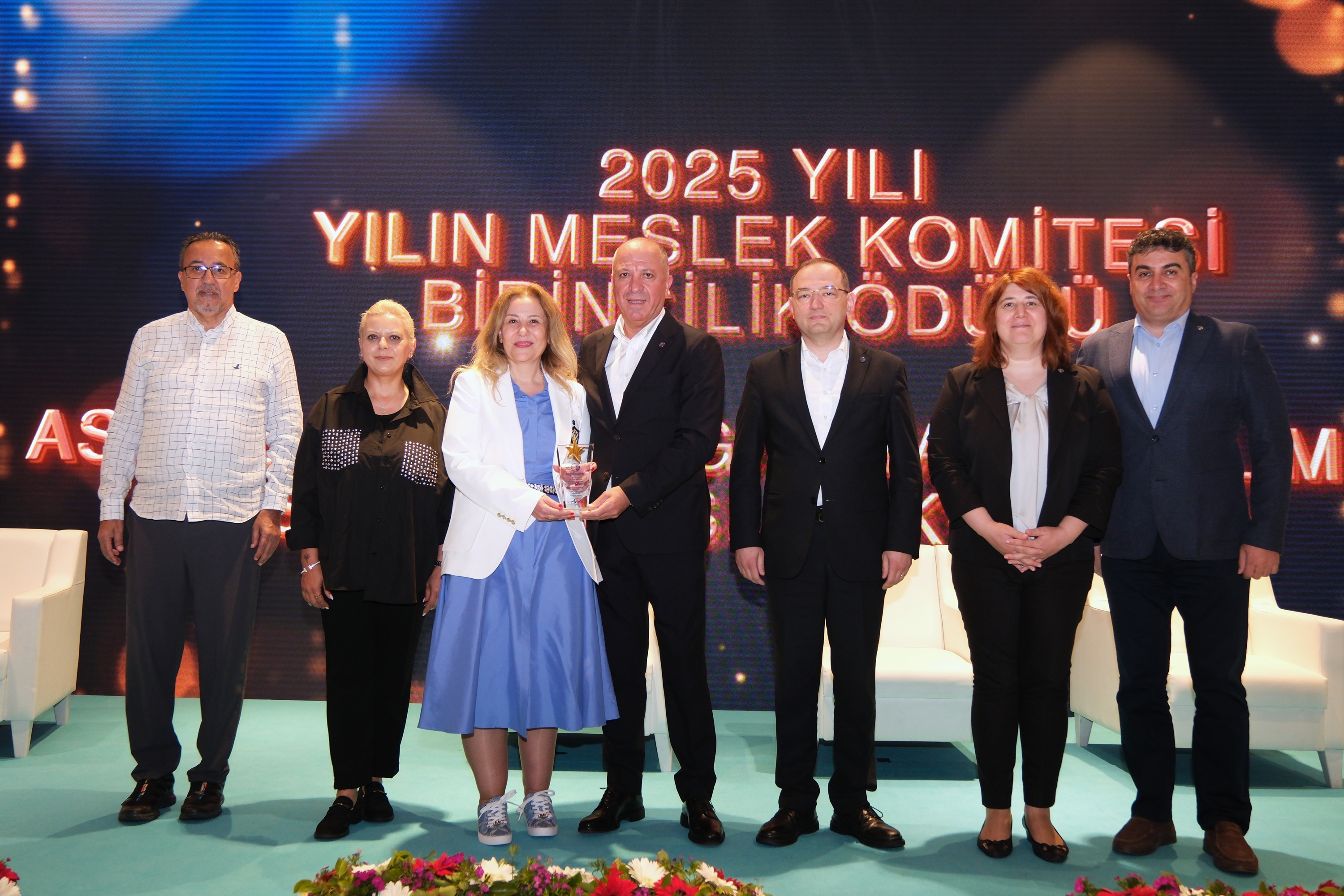
1st PLACE: ASO NO. 35 SOFTWARE INDUSTRY PROFESSIONAL COMMITTEE
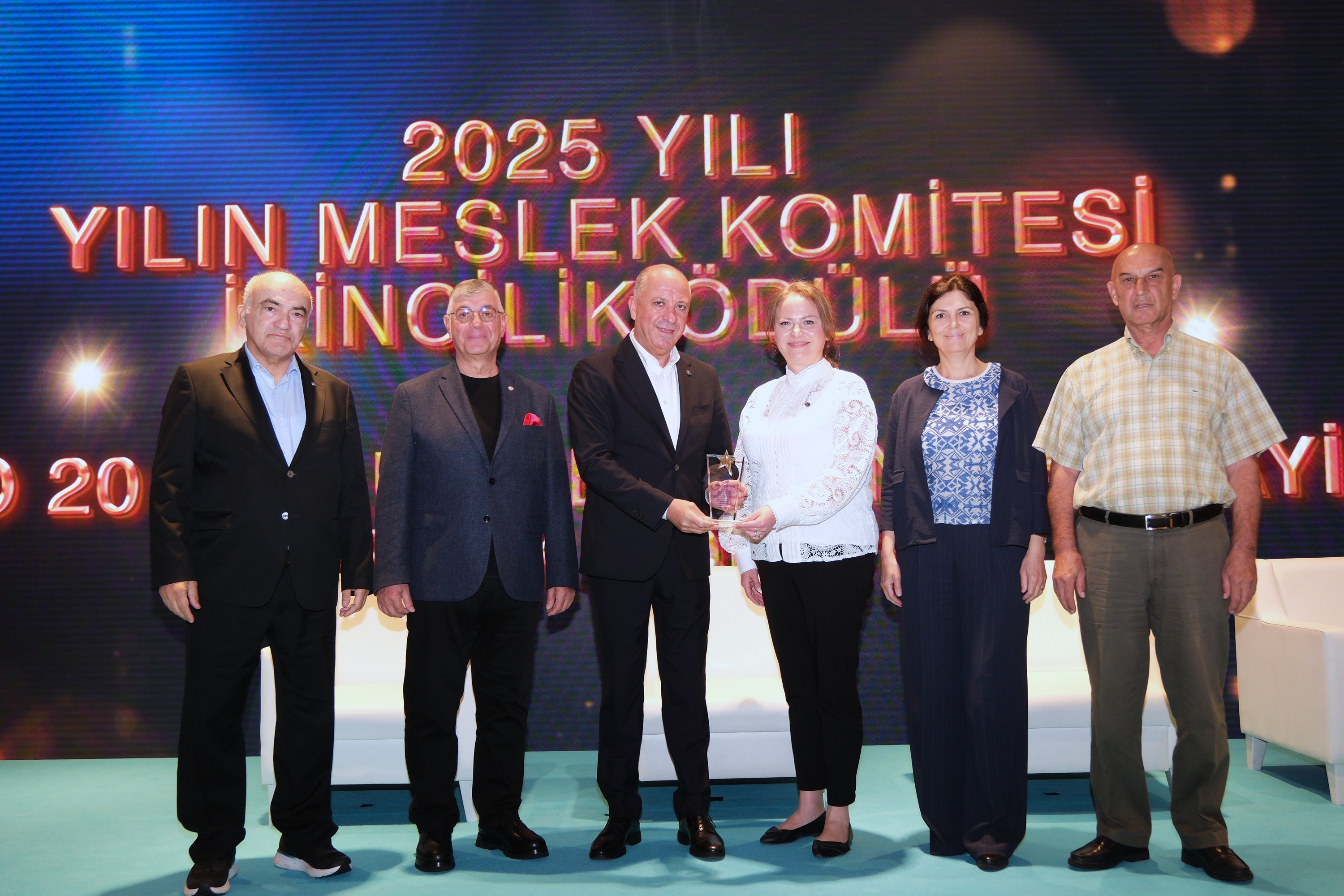
2nd PLACE: ASO NO. 20 ELECTRONICS INDUSTRY PROFESSIONAL COMMITTEE
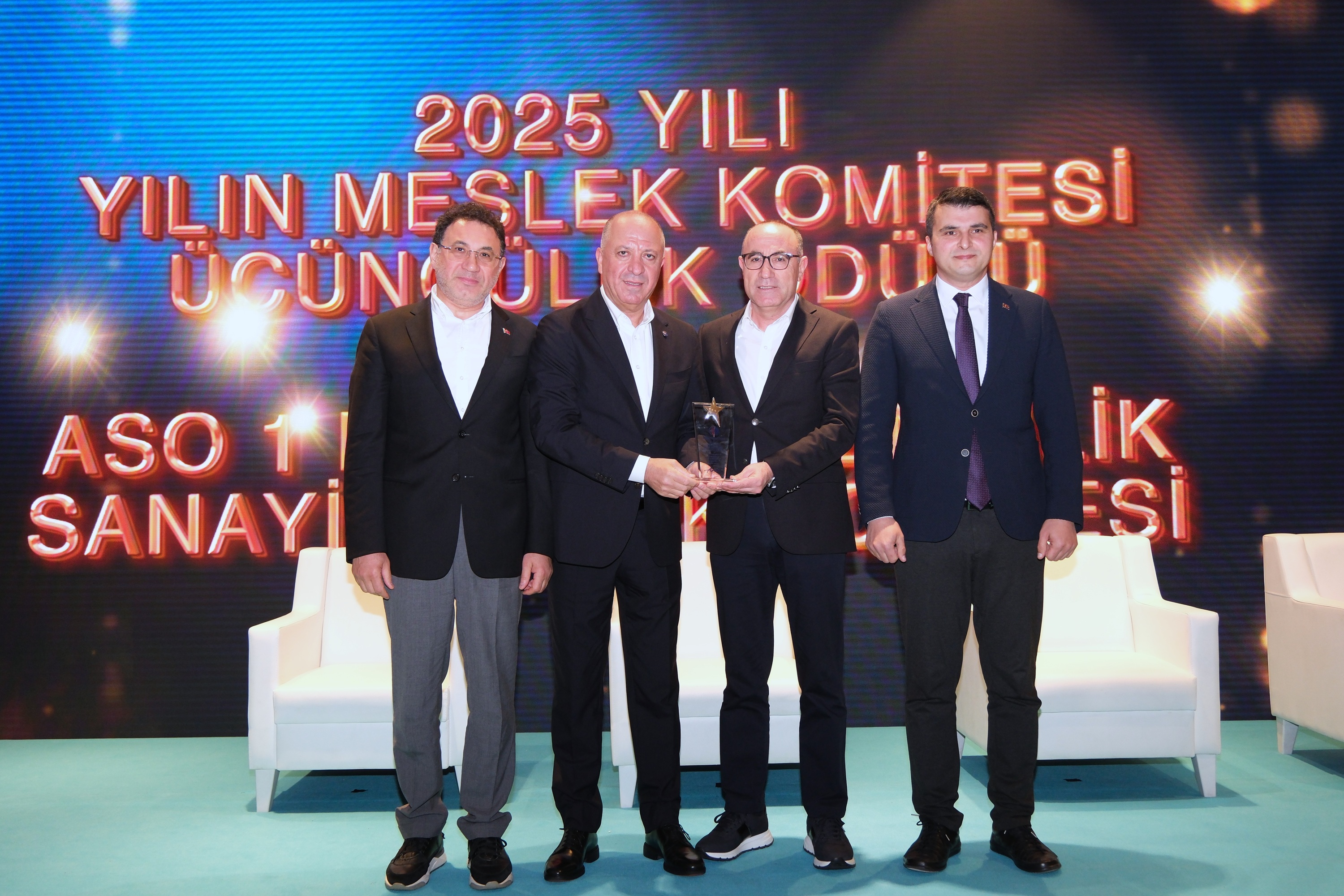
3rd PLACE: ASO NO. 1 MINING INDUSTRY PROFESSIONAL COMMITTEE
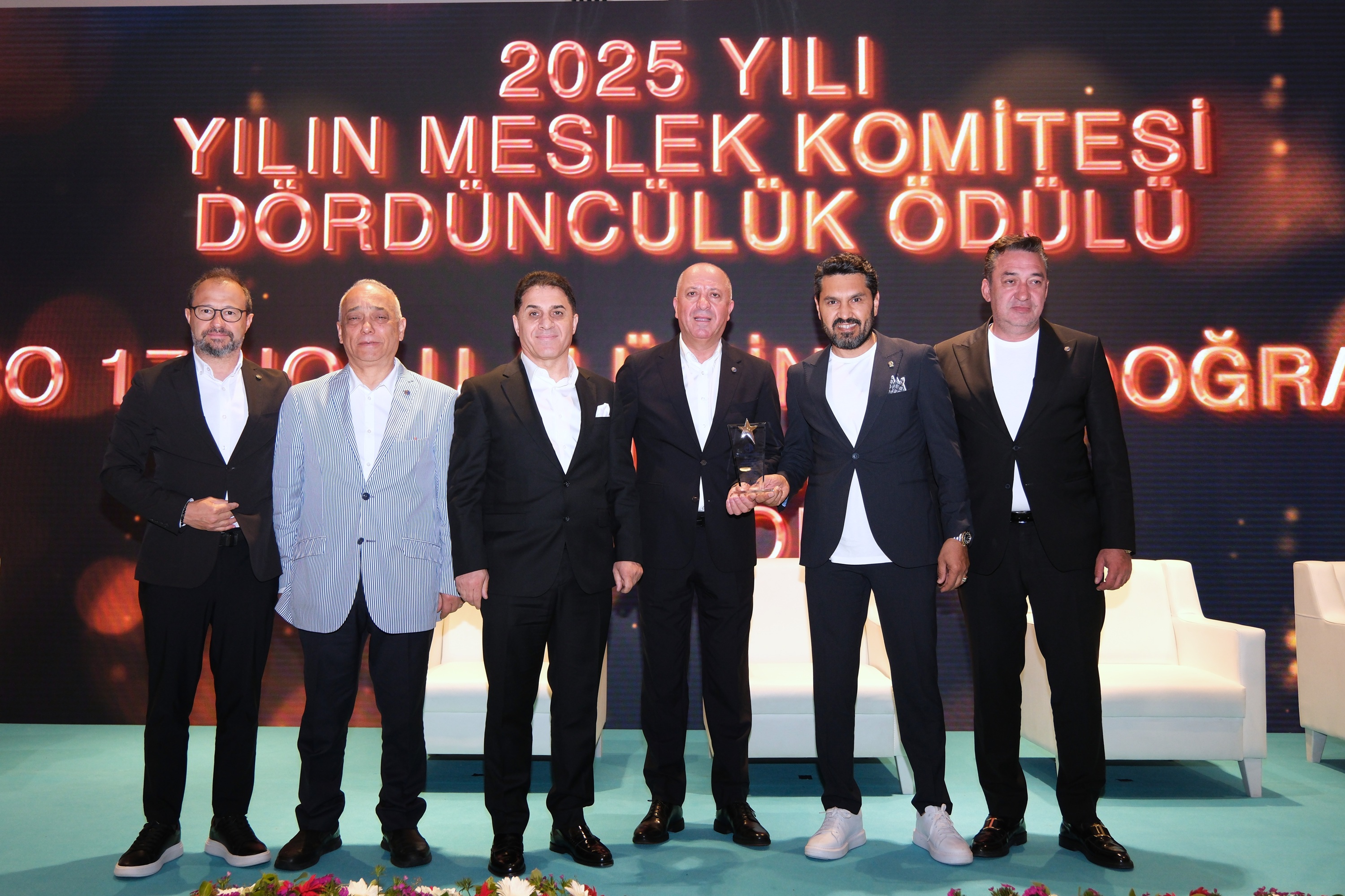
4th PLACE: ASO NO. 17 ALUMINUM JOINERY MANUFACTURING INDUSTRY PROFESSIONAL COMMITTEE
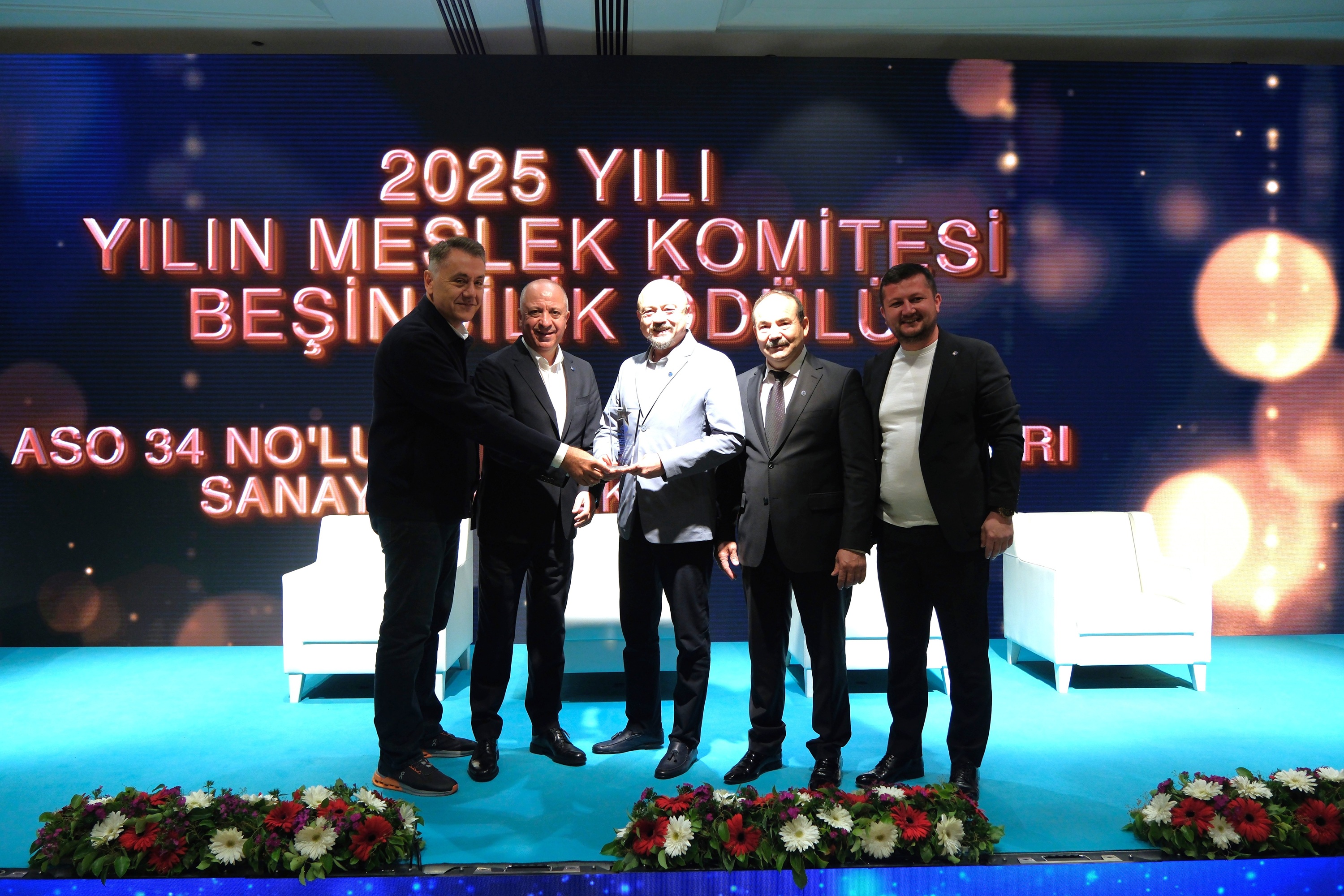
5th PLACE: ASO NO. 34 OFFICE FURNITURE INDUSTRY PROFESSIONAL COMMITTEE
“INDUSTRIALISTS’ ACCESS TO FINANCE” PANEL
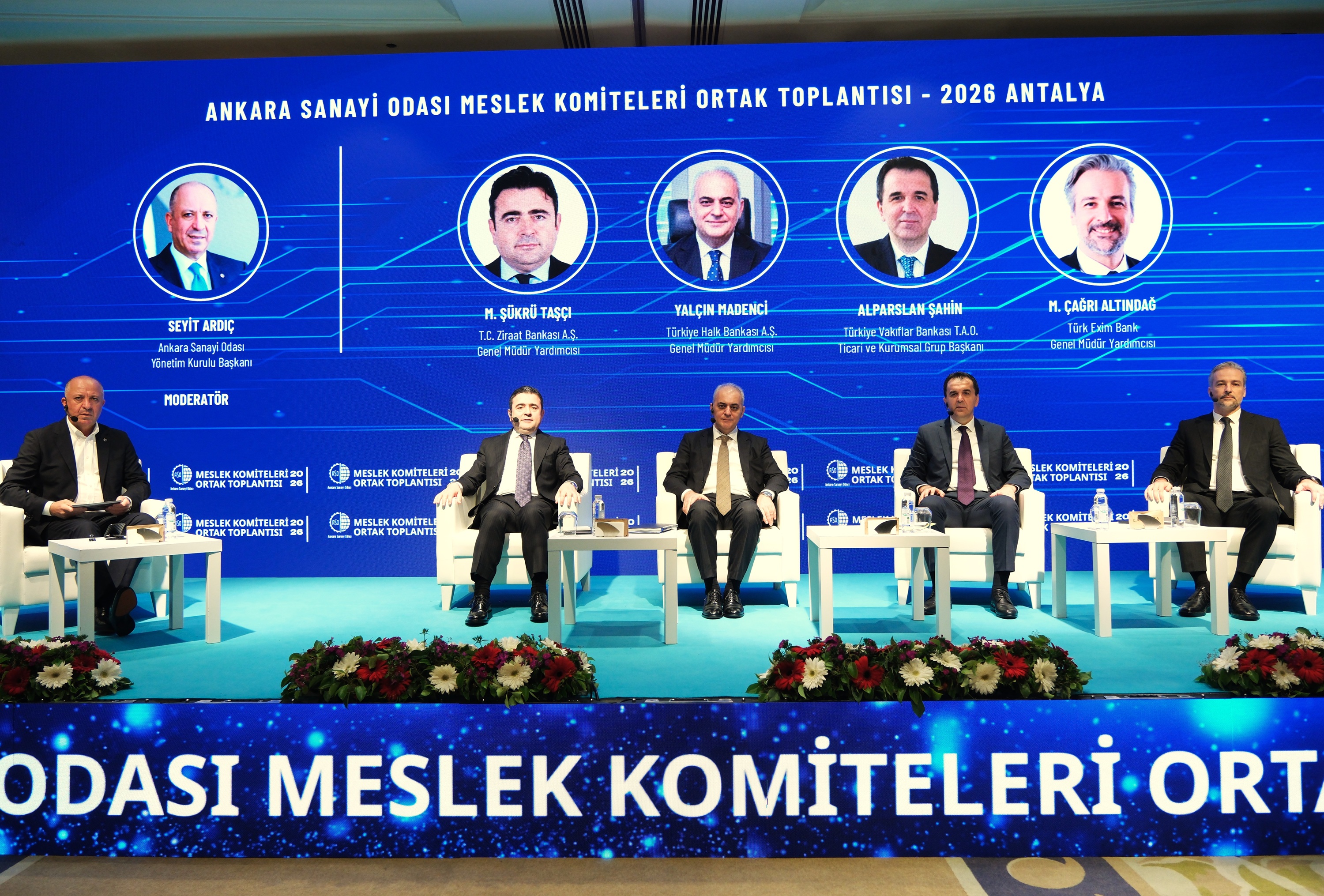
The Joint Meeting of ASO Professional Committees continued with the panel titled “Industrialists’ Access to Finance,” attended by Deputy General Managers of public banks.
The panel, moderated by ASO Chairman Seyit Ardıç, featured Mehmet Şükrü Taşçı, Deputy General Manager of Ziraat Bankası; Yalçın Madenci, Deputy General Manager of Halkbank; Alparslan Şahin, Head of Commercial and Corporate Banking Group at VakıfBank; and Mustafa Çağrı Altındağ, Deputy General Manager of Türk Eximbank.
In his opening speech, Chairman Ardıç emphasized that the real sector and the financial sector are two complementary driving forces of the Turkish economy.
“The stronger the communication and cooperation between these two sectors, the more solid the foundations of our country’s macroeconomic stability will be.”
Chairman Ardıç also thanked Alpaslan Çakar, Chairman of the Banks Association of Türkiye, for his continuous support and positive approach toward resolving industrialists’ problems, as well as the Deputy General Managers of public banks participating in the panel.
The panel addressed institutional mechanisms required to strengthen a more sustainable, production-oriented, and trust-based relationship between the real sector and the banking sector; new tools developed by banks regarding alternative credit and financing models for meeting the real sector’s working capital, investment, export, and green transformation financing needs; and the criteria exporters should prioritize in order to benefit more effectively from Eximbank’s credit, insurance, and guarantee mechanisms.
In his closing remarks, Chairman Ardıç stated:
“Our common goal is a strong Türkiye that grows through production. I believe that as long as we act together in unity and solidarity, no obstacle can stand in the way of achieving this goal.”
Following the panel, Deputy General Managers of the banks held one-on-one meetings with industrialists regarding their demands and suggestions. The 1st Joint Meeting of ASO Professional Committees for 2026 concluded with sectoral evaluations and discussions.